How many companies use AI in 2026?
The honest answer is that a lot of companies now use AI but the exact number depends on what you mean by 'use'.
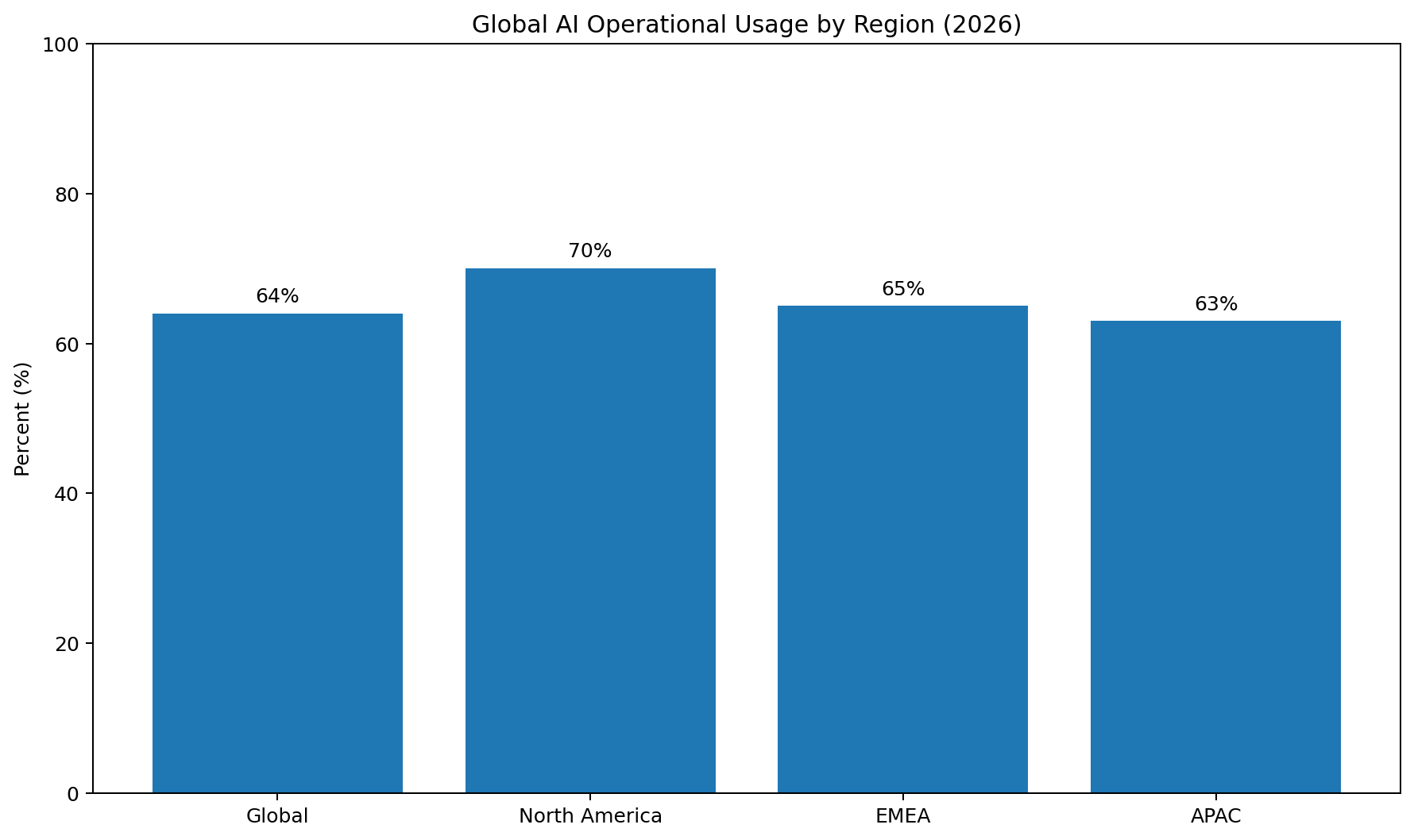
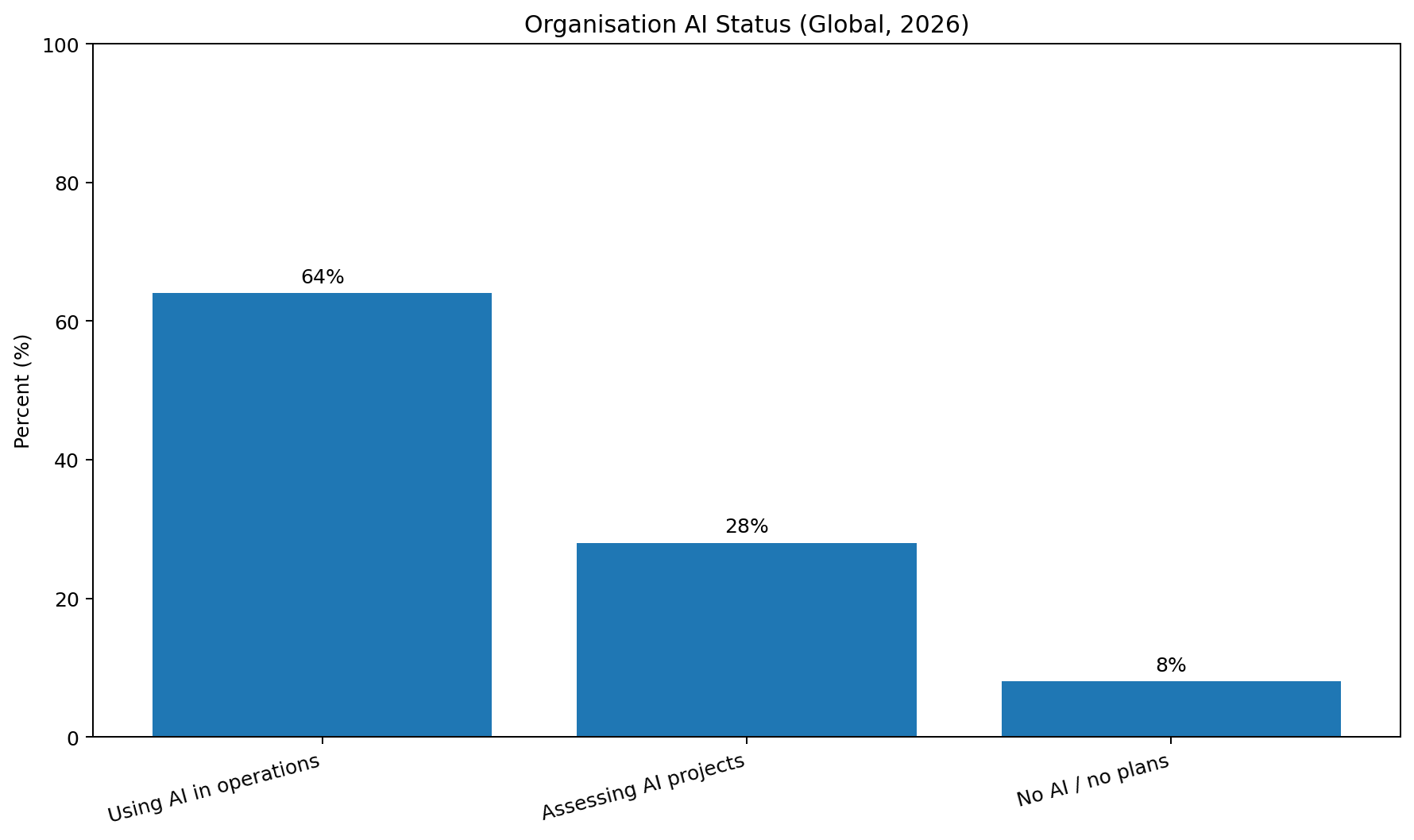
If you mean large organisations that are actively using AI in operations, the most recent 2026 data from NVIDIA puts that figure at 64% overall. If you narrow it to North America, it rises to 70%. In EMEA it is 65% and in APAC it is 63%. Another 28% of organisations are still assessing AI projects while only 8% say they are not using AI and have no plans to start.
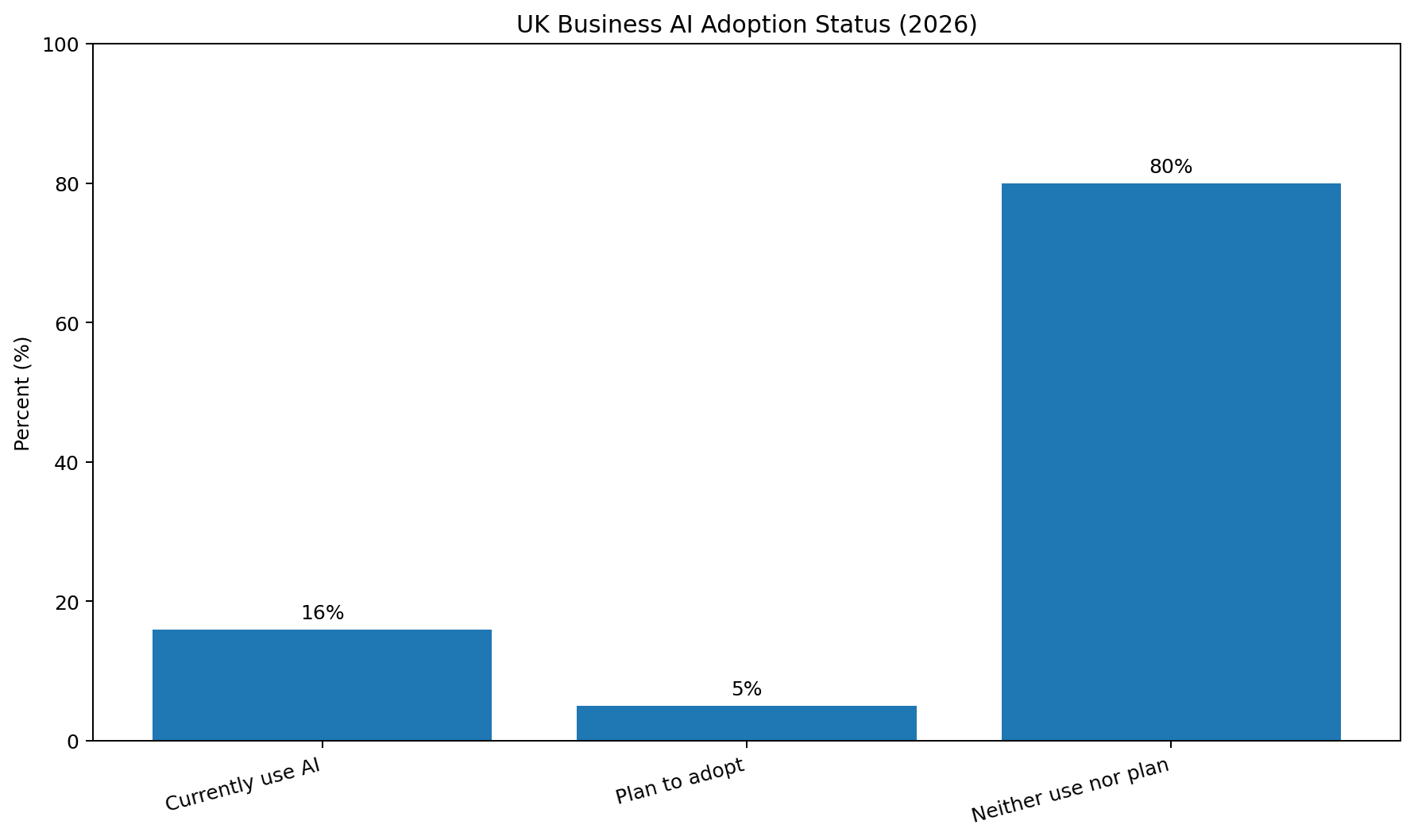
If you mean businesses in the UK overall, the number is much lower. UK government research published in February 2026 found that 16% of UK businesses currently use at least one AI technology. Another 5% plan to adopt AI in future while 80% neither use AI nor plan to. This tells us something important. AI is already mainstream in enterprise circles but it is still far from universal across the full business population.
This gap is the key trend of 2026. Big organisations are moving quickly. Smaller firms and the wider business base are moving more slowly. AI is no longer niche but it is not yet evenly distributed.
AI usage is broad but depth still varies massively
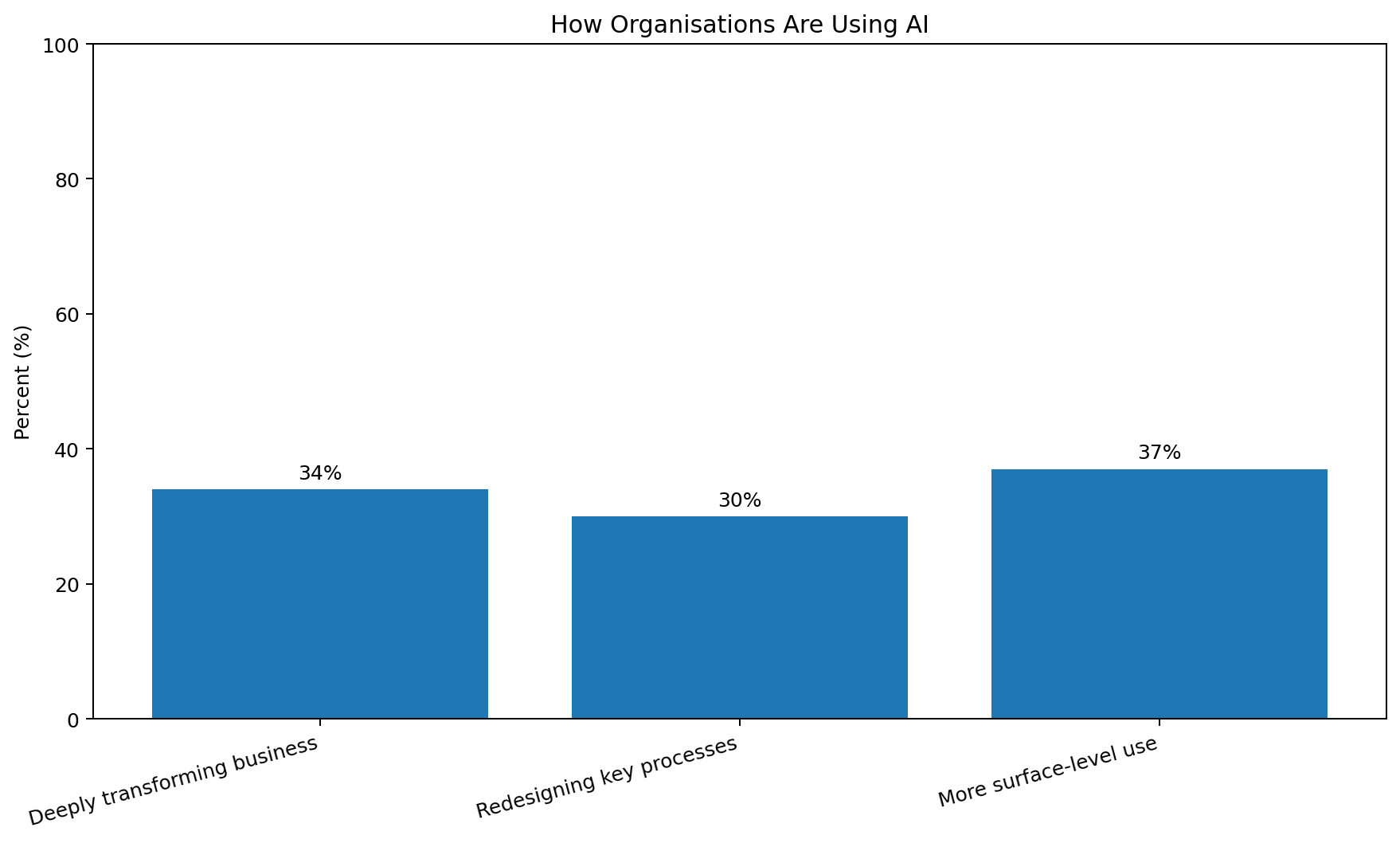
Deloitte’s 2026 enterprise research shows that adoption is spreading faster than transformation. 34% of surveyed organisations say they are using AI to deeply transform their business, creating new products, services or core processes. Another 30% are redesigning key processes around AI and the remaining 37% are using AI more superficially with little or no major process change.
This is significant because it showcases the difference between using AI and being changed by AI. A company can have ChatGPT access, some copilots and a few automations and yet still not be structurally transformed. In 2026 lots of businesses are in this middle ground.
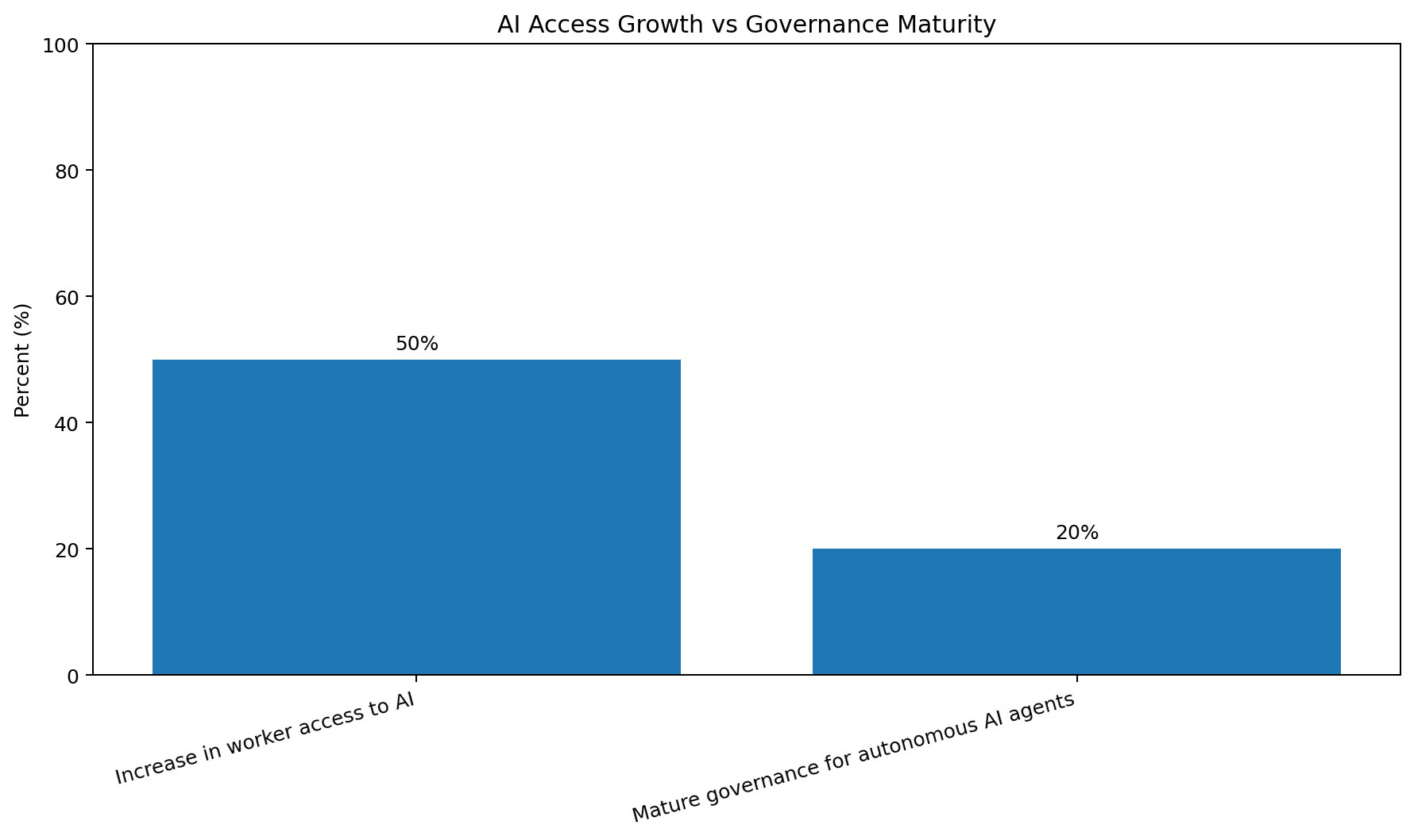
Deloitte also reports that worker access to AI increased by 50% in 2025 and the number of companies with 40% or more of AI projects in production is expected to double within six months. The key word being double which is just mind blowing. Businesses are moving from pilot mode into deployment mode.
AI is now delivering business value
Another reason adoption keeps climbing is that there are returns! Companies are not just experimenting anymore, many are seeing actual returns.
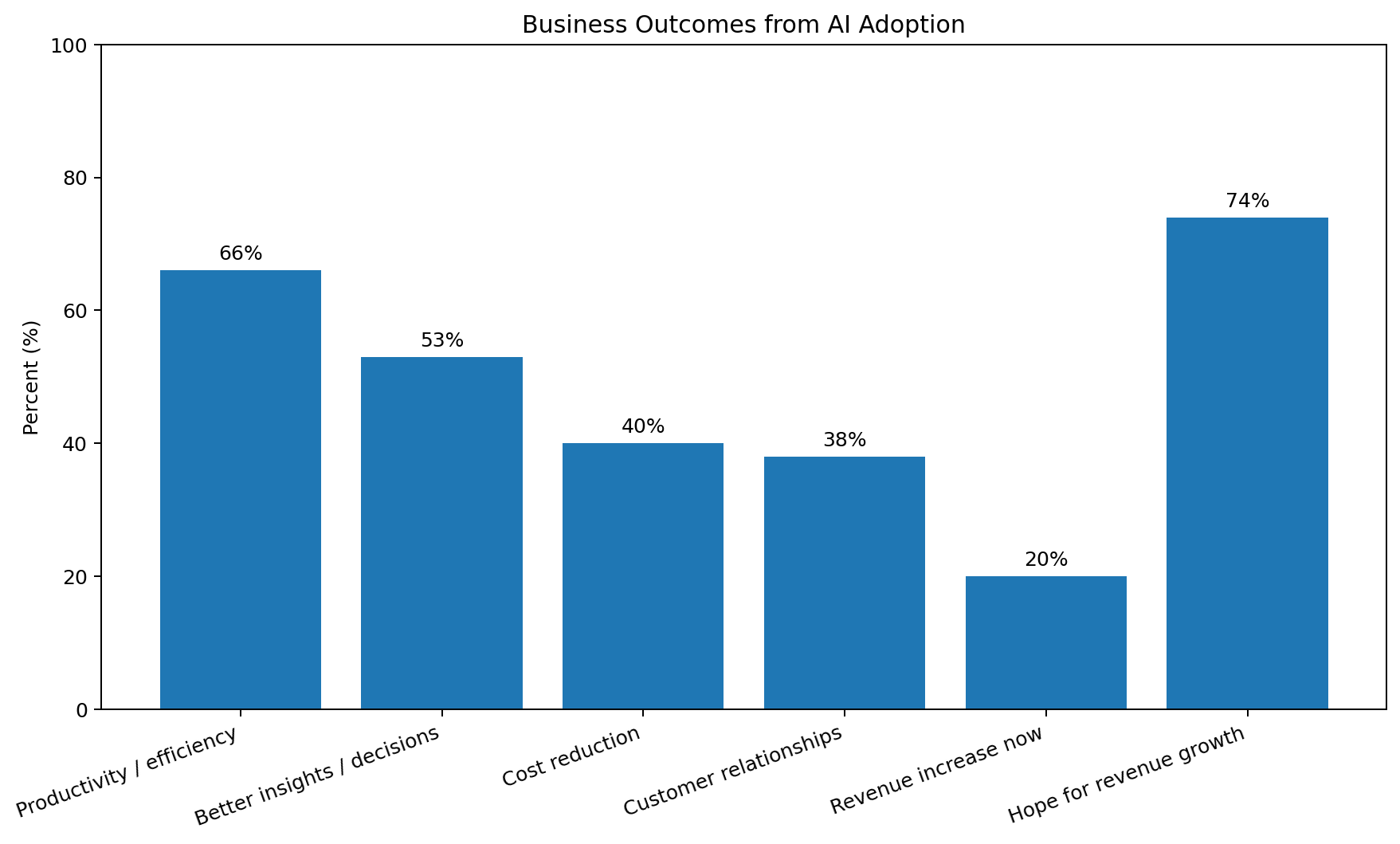
According to Deloitte’s 2026 report, 66% of organisations say AI is improving productivity and efficiency. 53% say it is improving insights and decision-making. 40% report cost reduction. 38% say it is improving client or customer relationships. 20% say it is improving products or services and fostering innovation and 20% say it is already increasing revenue. On top of that, 74% hope AI will grow revenue in future.
So if you are asking why so many companies are adopting AI in 2026, the answer is simple... the biggest businesses increasingly believe the technology is useful enough to operationalise.
Professional services have reached a tipping point
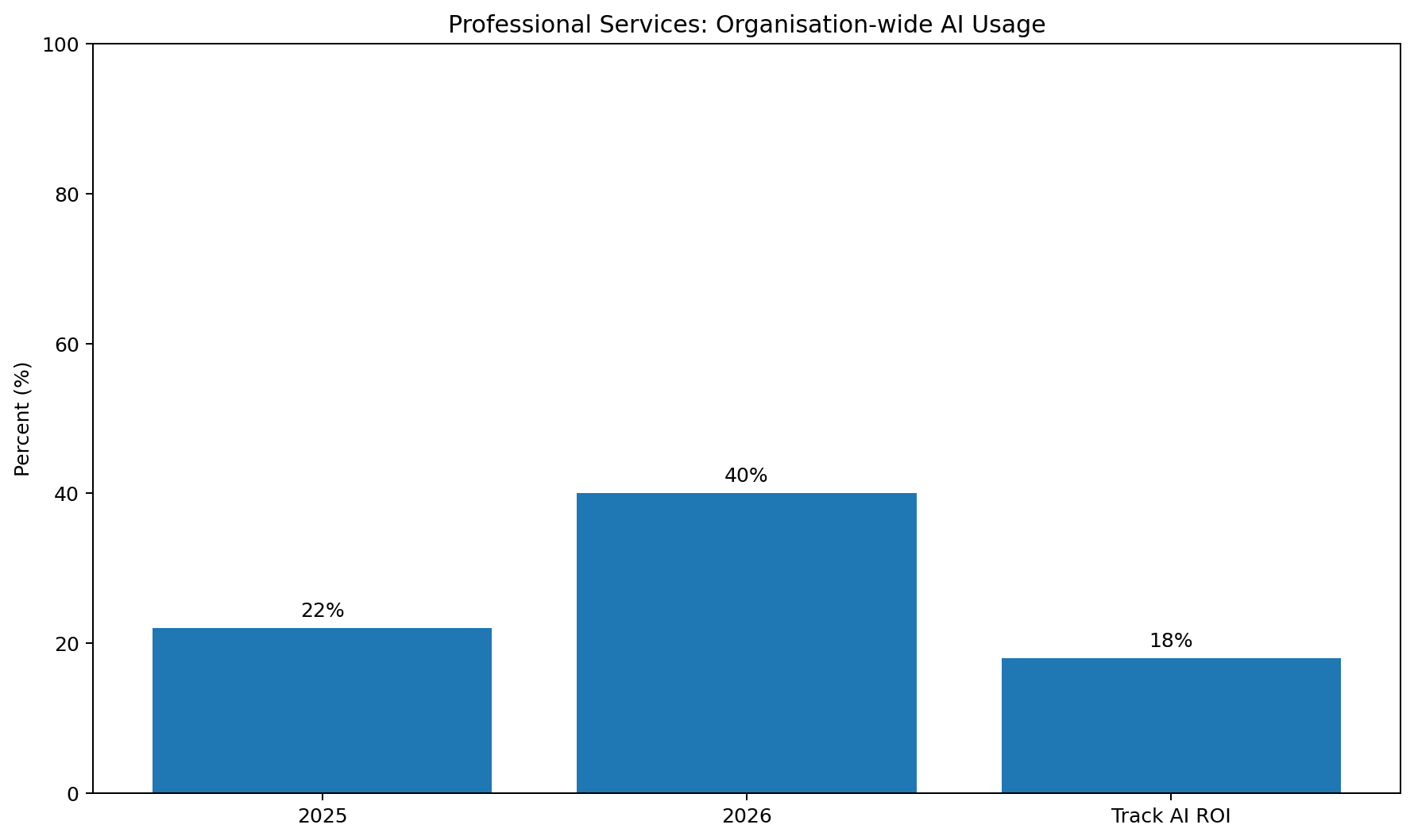
Thomson Reuters' 2026 report says organisation wide AI usage in professional services has almost doubled to 40% in 2026, up from 22% in 2025. At the same time only 18% say their organisation tracks AI ROI. Adoption is surging faster than measurement discipline.
This is a classic 2026 pattern. Companies are pushing AI into the workflow because they do not want to be left behind. But many are still weak on governance, measurement and long term operating models.
Small businesses are using AI too but full integration is still rare
The small business picture is mixed.
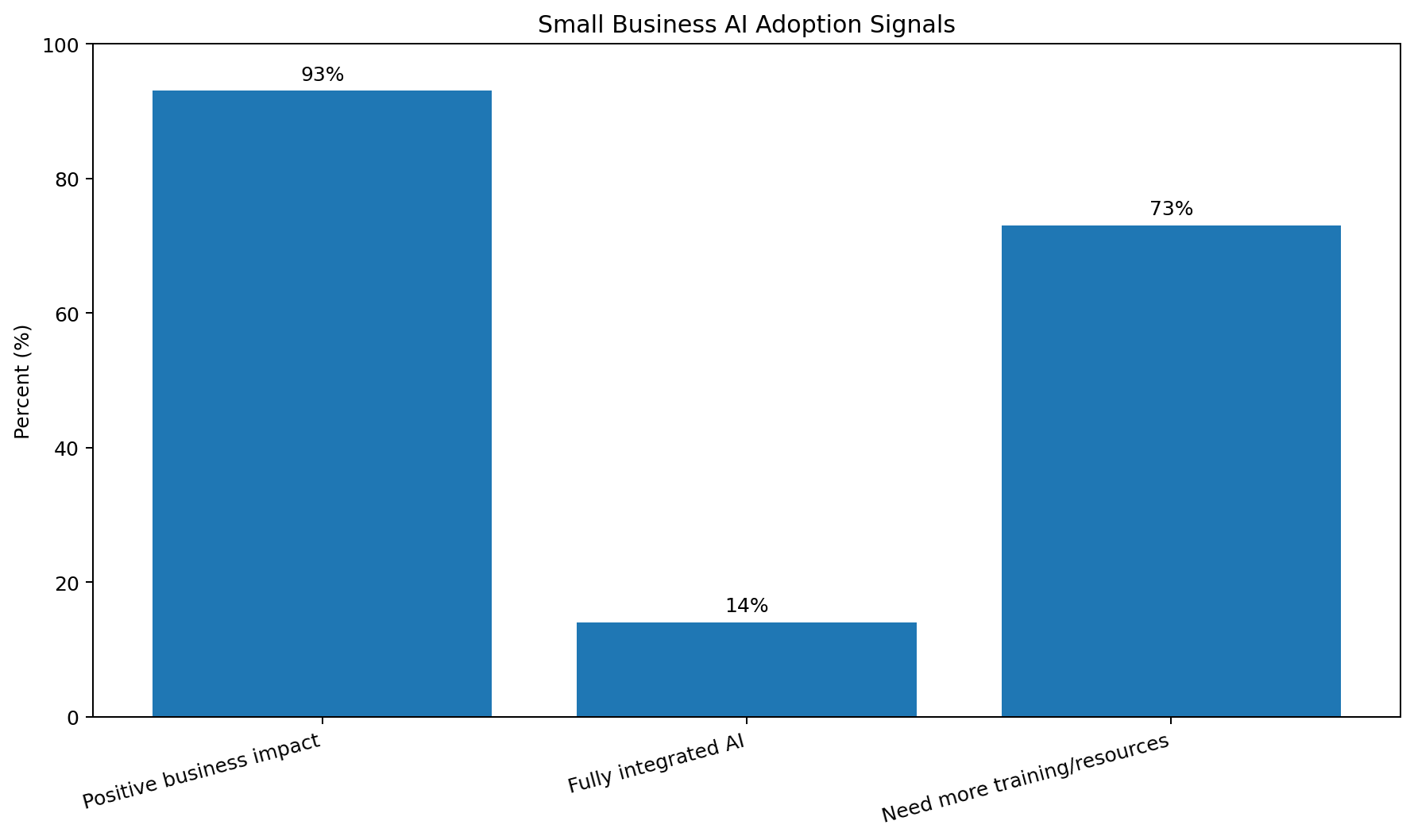
Goldman Sachs reported in March 2026 that 93% of small businesses in its survey say AI has had a positive business impact. But only 14% say they have fully integrated AI into core operations. And 73% say more training and resources would help them implement AI successfully.
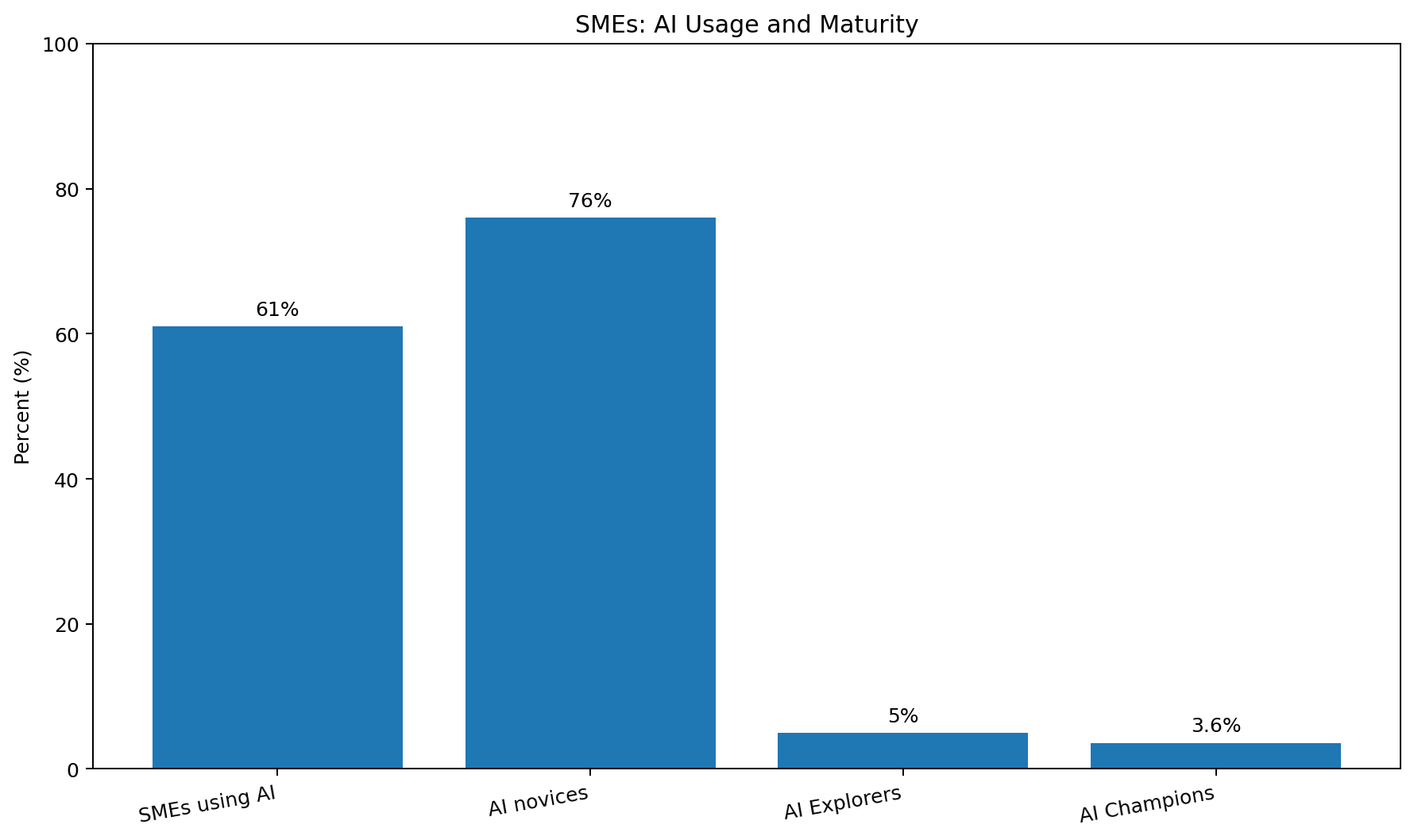
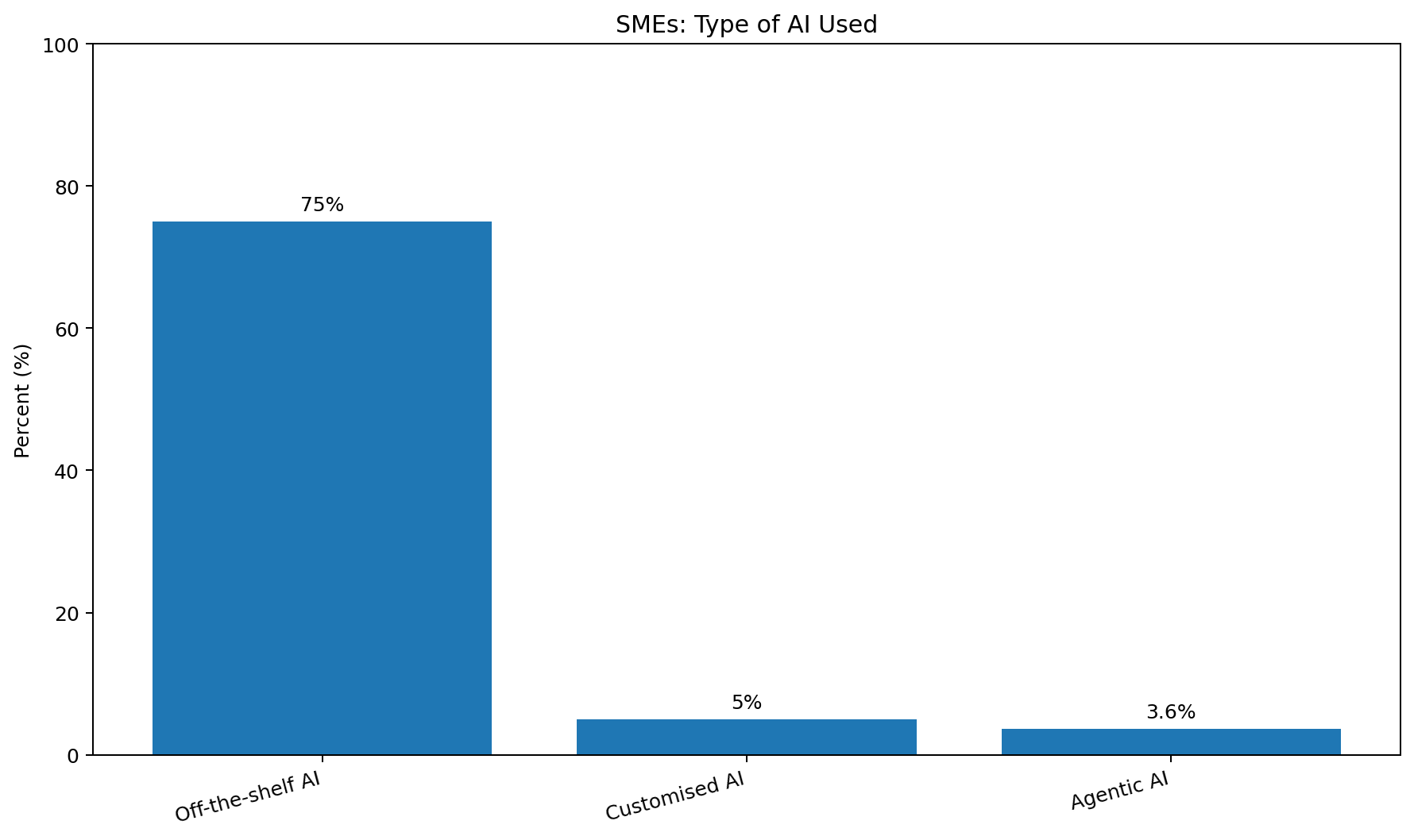
The OECD’s 2026 SME survey adds more depth. Across a non representative sample of over 2,000 SMEs in 12 OECD countries, 61% of SMEs report using AI. But this headline comes with a big caveat. 76% of AI-using SMEs are classed as 'AI novices' mostly relying on simple off the shelf tools for isolated tasks. Only 5% are 'AI Explorers' and just 3.6% are 'AI Champions' using customised or agentic AI across most business areas.
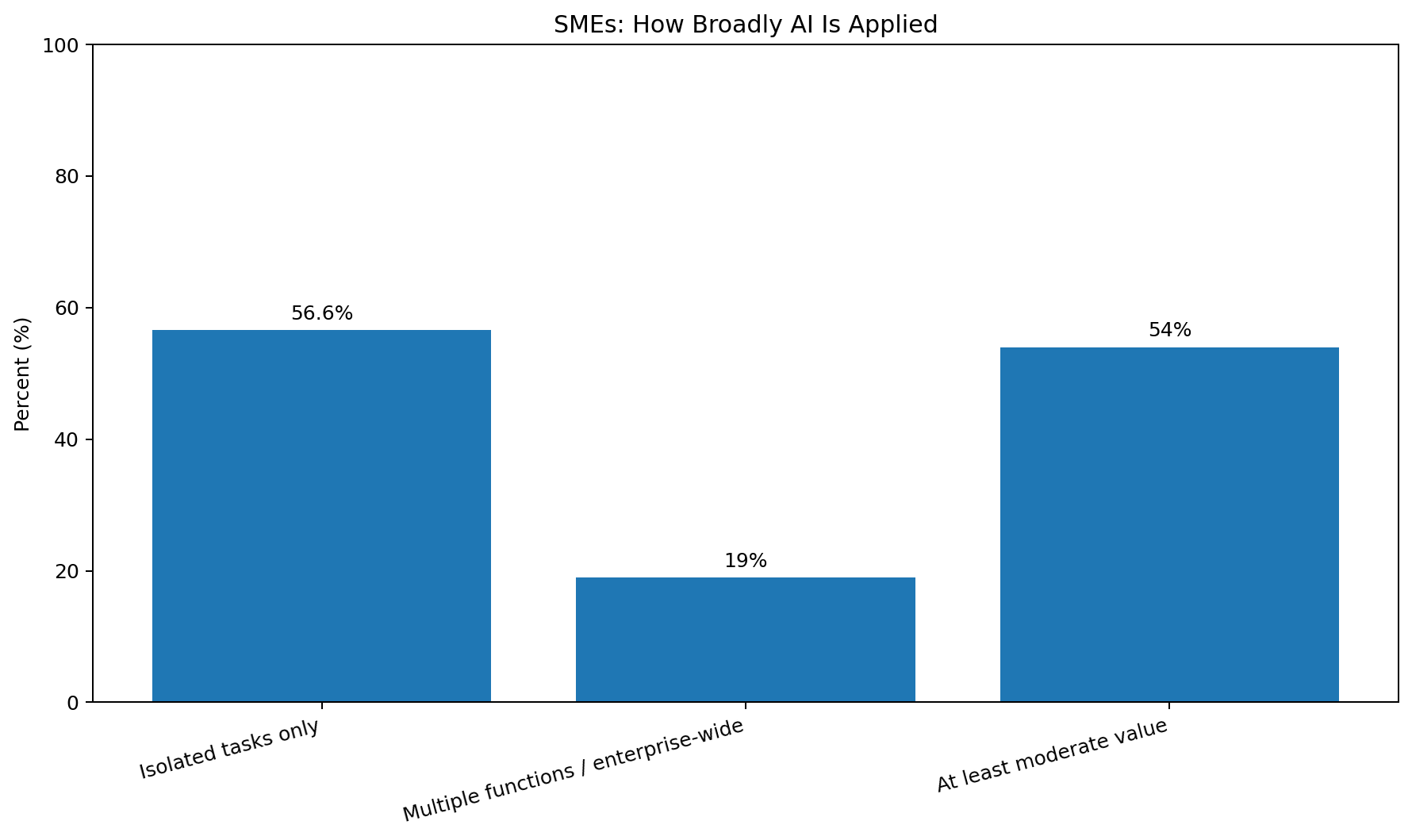
The same OECD report says 75% of respondents use off the shelf AI applications, only 5% use customised AI and 3.6% deploy agentic AI. It also says 56.6% use AI only for isolated tasks while just 19% apply AI across multiple functions or enterprise wide. So yes SME AI use is rising quickly but in most cases it is still shallow rather than deeply embedded.
In the UK AI adoption is still modest overall
The UK government’s February 2026 research is useful because it looks at the broader business base, not just AI forward enterprises.
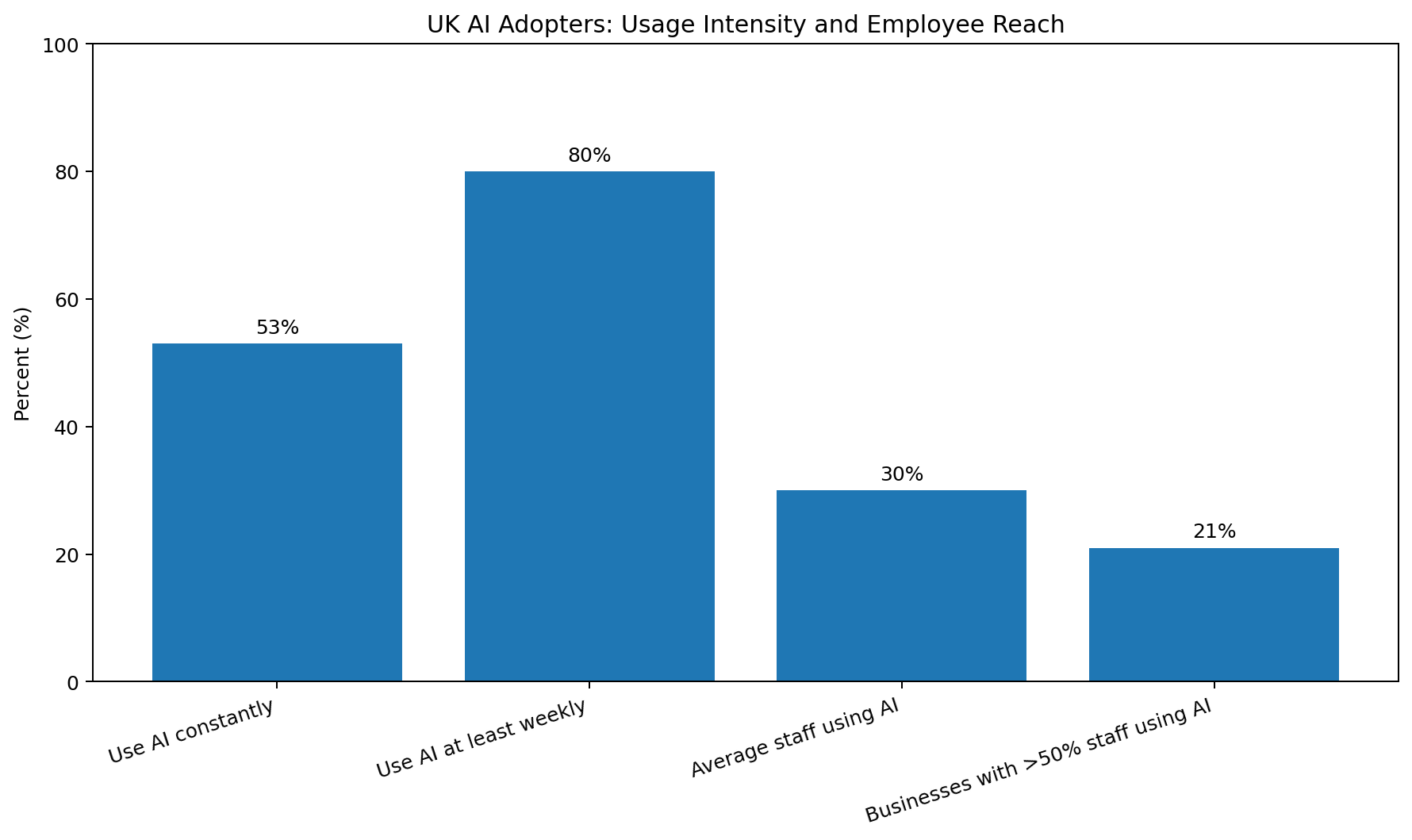
It found that 16% of UK businesses currently use at least one AI technology. Among those adopters, 85% use natural language processing and text generation. 53% say they use AI constantly and 80% use it at least weekly. On average, 30% of staff are currently using AI inside AI-adopting businesses. 21% of those businesses say more than half of their staff are using AI already.
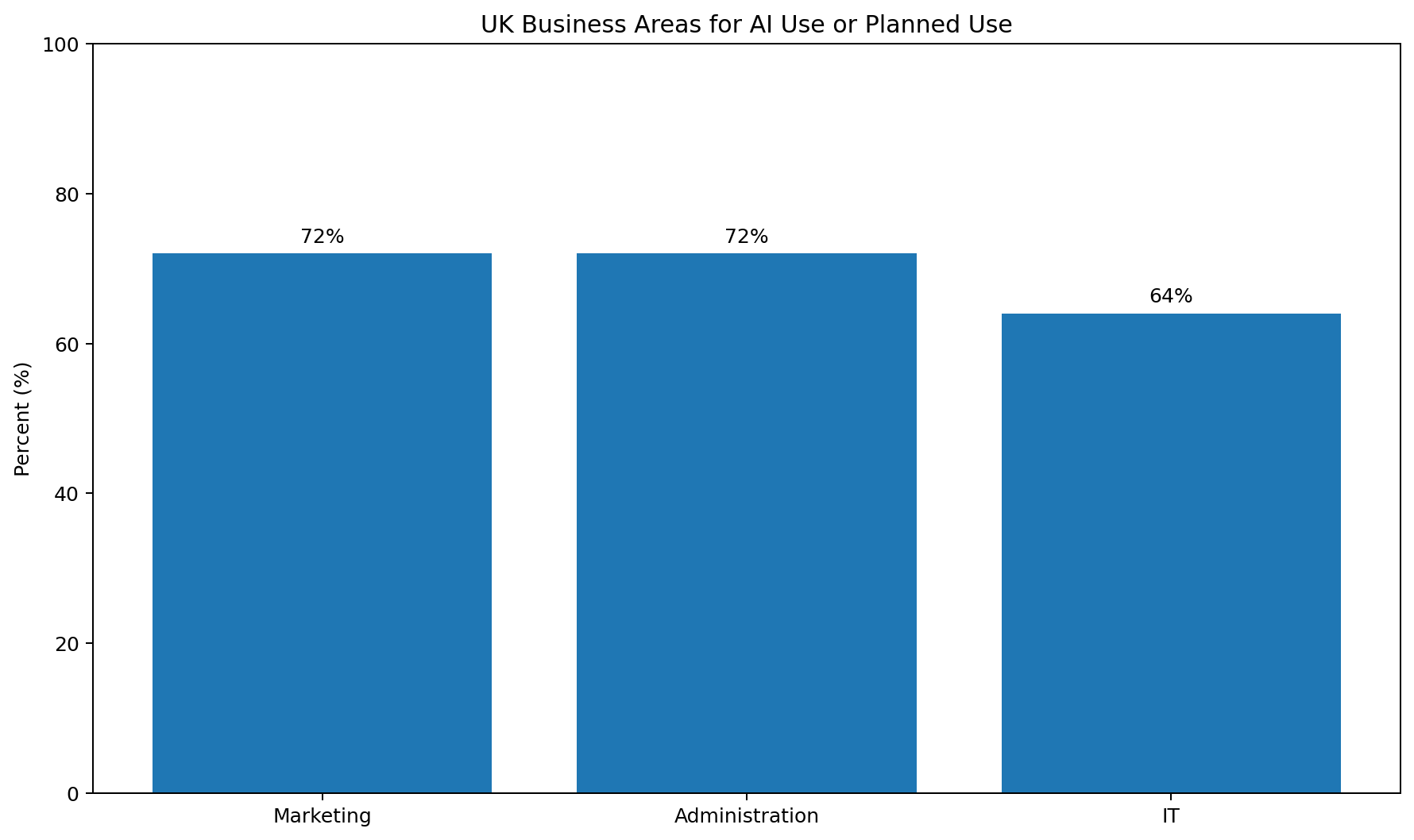
The most common business areas for AI use or planned use were marketing (72%), administration (72%) and IT (64%). This tells you where adoption starts first in the real world. Content, routine admin and technical support functions.
The same report also found that among current UK business adopters, 48% expect more employees to be using AI over the next one to two years while only 2% expect fewer employees to use it. So even in a country where current business-level adoption is still relatively low, the direction of travel is overwhelmingly upward.
AI strategy is spreading faster than AI governance
This is one of the most important 2026 trends.
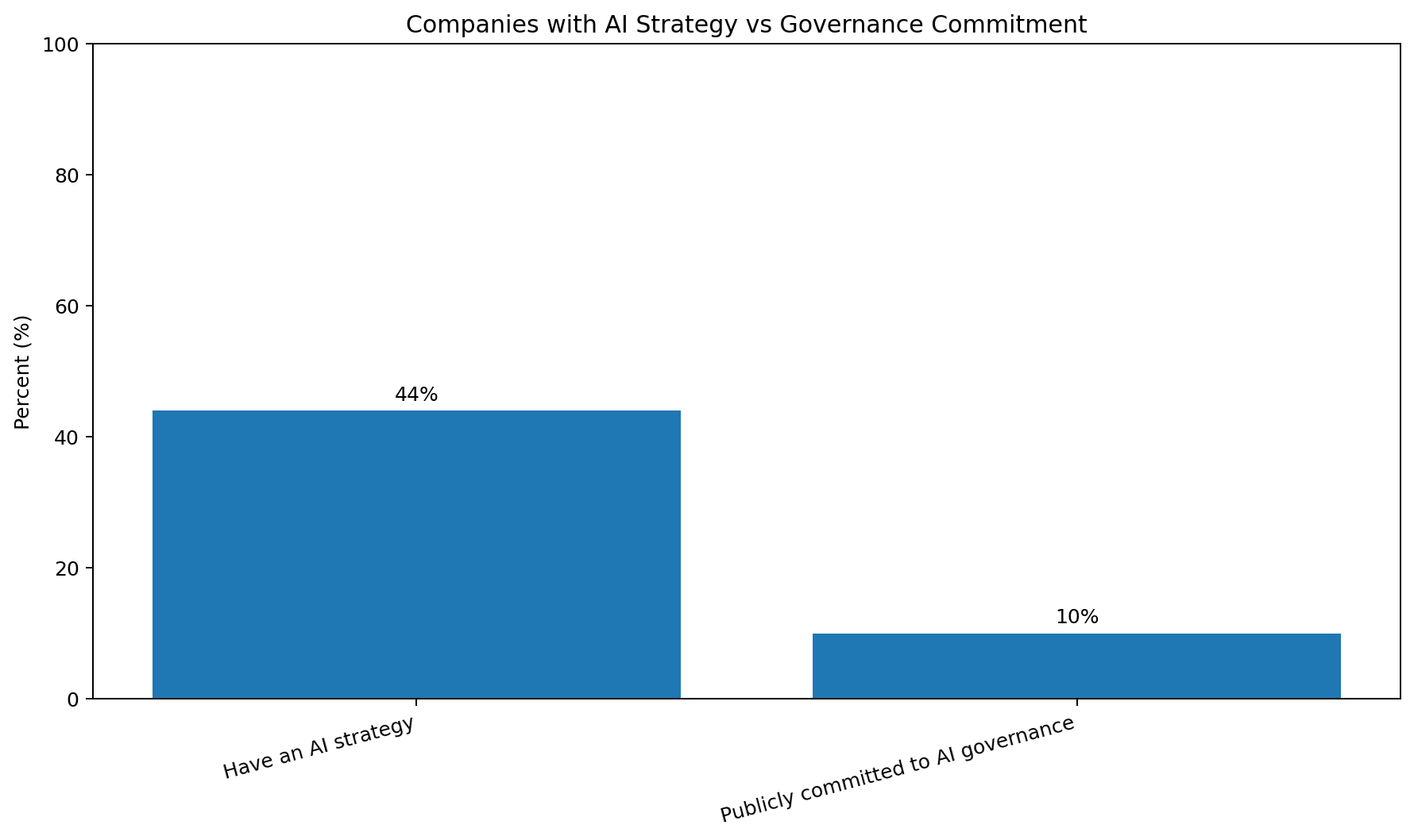
UNESCO and the Thomson Reuters Foundation published a global report in March 2026 based on data from 3,000 companies. It found that 44% of companies reported having an AI strategy but only 1 in 10 were publicly committed to adhering to an AI governance framework. This is a striking gap between ambition and control.
Deloitte’s data points in the same direction. It says only 1 in 5 companies has a mature model for governance of autonomous AI agents. Many businesses are moving into agentic or semi autonomous systems faster than their oversight is maturing.
This is why the headline 'how many companies use AI?' does not tell the whole story. In 2026, the more useful question is often... how many companies are using AI in a way that is scaled, governed and strategically embedded? This number is still much lower.
So how many companies use AI in 2026?
Here is the best evidence based summary:
At the enterprise level, current 2026 surveys suggest roughly two thirds of organisations are already using AI operationally. In NVIDIA’s 2026 data, the figure is 64% globally.
In some sectors, usage is already much higher than the headline suggests. In professional services, organisation wide usage has hit 40%, which is nearly double last year. Among surveyed SMEs in the OECD’s 2026 dataset, 61% say they use AI, although most are still basic users. Among UK businesses overall, the number is much lower at 16%.
The short version is this:
AI use is now mainstream among larger and more digitally mature organisations. It is rising fast among SMEs. But across the full economy, especially when you include smaller and less advanced businesses, adoption is still uneven.
This is the real state of play in 2026.
The biggest 2026 AI adoption stats at a glance
Here are the strongest recent numbers to pull from this year:
64% of organisations are actively using AI in operations globally.
70% of organisations in North America are actively using AI.
65% of organisations in EMEA are actively using AI.
63% of organisations in APAC are actively using AI.
28% of organisations are still assessing AI projects.
8% say they are not using AI and have no plans to start.
16% of UK businesses currently use at least one AI technology.
5% of UK businesses plan to adopt AI in the future.
80% of UK businesses neither use AI nor plan to.
85% of UK AI adopters use NLP and text generation.
53% of UK AI adopters use AI constantly.
80% of UK AI adopters use AI at least weekly.
30% is the average share of staff using AI inside UK AI-adopting businesses.
21% of UK AI-adopting businesses say over half their staff already use AI.
72% of UK AI use or planned use is in marketing.
72% of UK AI use or planned use is in administration.
64% of UK AI use or planned use is in IT.
40% of professional services firms now report organisation wide AI usage, up from 22% in 2025.
18% of professional services organisations track AI ROI.
93% of small businesses in Goldman Sachs’ survey say AI has had a positive business impact.
14% of those small businesses have fully integrated AI into core operations.
73% say more training and resources would help them implement AI.
61% of surveyed SMEs in the OECD dataset report using AI.
76% of AI-using SMEs are still 'AI novices'.
5% of SMEs are 'AI Explorers'.
3.6% of SMEs are 'AI Champions'.
75% of SME respondents use off-the-shelf AI tools.
5% use customised AI.
3.6% deploy agentic AI.
56.6% of SMEs use AI only for isolated tasks.
19% use AI across multiple functions or enterprise wide.
54% of surveyed SMEs say they get at least moderate value from AI.
44% of companies in the UNESCO / Thomson Reuters Foundation dataset have an AI strategy.
10% are publicly committed to an AI governance framework.
34% of Deloitte-surveyed organisations are deeply transforming with AI.
30% are redesigning key processes around AI.
37% are using AI only at a more surface level.
66% report productivity and efficiency gains from AI.
53% report better insights and decision making.
40% report cost reduction.
20% say AI is already increasing revenue.
74% hope AI will grow revenue in future.
50% growth in worker access to AI was recorded in 2025, feeding into 2026 deployment momentum.
20% or one in five companies have a mature governance model for autonomous AI agents.
Sources
https://blogs.nvidia.com/blog/state-of-ai-report-2026/
https://www.gov.uk/government/publications/ai-adoption-research/ai-adoption-research
https://www.deloitte.com/uk/en/issues/generative-ai/state-of-ai-in-enterprise.html
https://www.thomsonreuters.com/en-us/posts/technology/ai-in-professional-services-report-2026/
https://www.trust.org/wp-content/uploads/2026/03/AICDI-2025-Responsible-AI-in-practice-1.pdf