Forget SEO and GEO. It will all be about AAIO.
AAIO or agentic AI optimisation is not yet a formal standards based category in 2026 in the way SEO became over the last two decades. But the shift behind the phrase is very real. The web is moving from a world where humans scan lists of blue links to one where AI systems summarise, recommend, compare, decide and act on behalf of users. In this world the winner is NOT the page that ranks. The winner is the page, product, API or data source an AI agent can understand, trust, cite and use.
This is why ‘optimisation’ is changing shape. Traditional SEO focused on ranking. GEO focused on being cited in generative outputs. AAIO goes further. It is about making your business machine legible, machine usable and machine trustworthy for agents that do more than answer questions. These systems plan, compare, pull structured facts, evaluate options, trigger workflows and complete tasks. If your brand cannot be parsed or acted on by an agent you risk becoming invisible. This is less about keywords and more about structured facts, clear entity signals, accessible data, pricing clarity, policy clarity, tool access and operational trust. The market data strongly supports this direction.
The first big reason AAIO matters - agents are moving into the stack fast
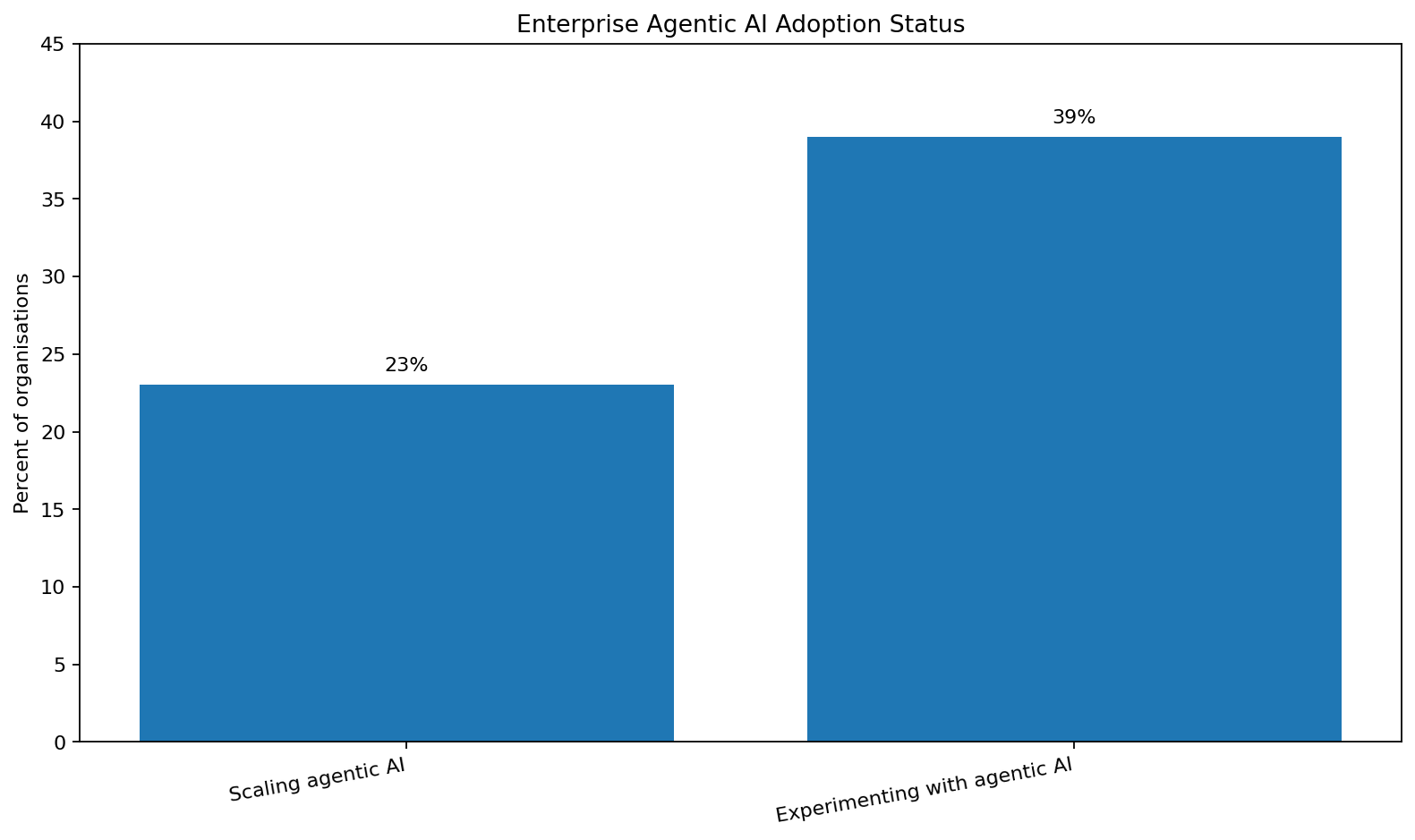
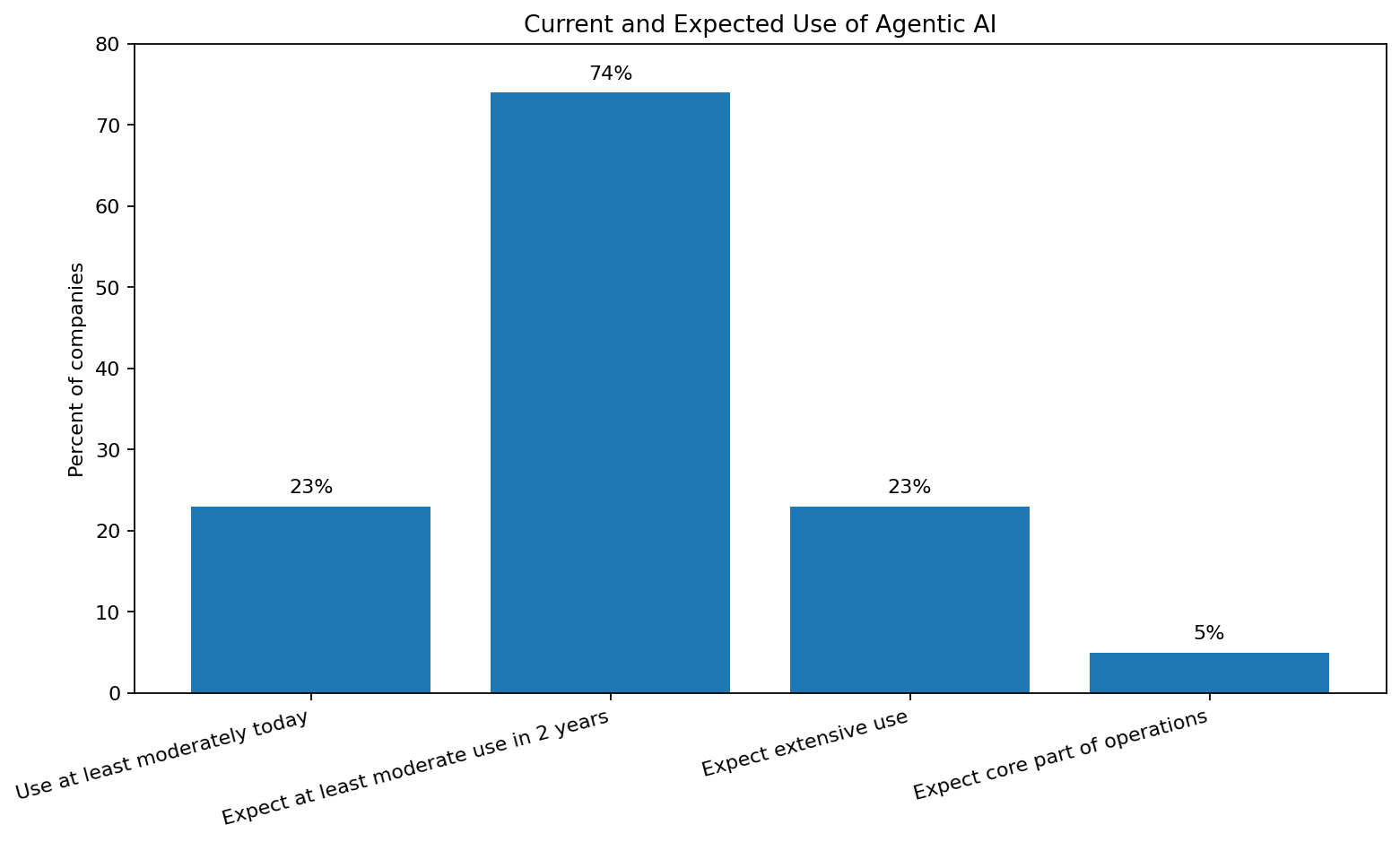
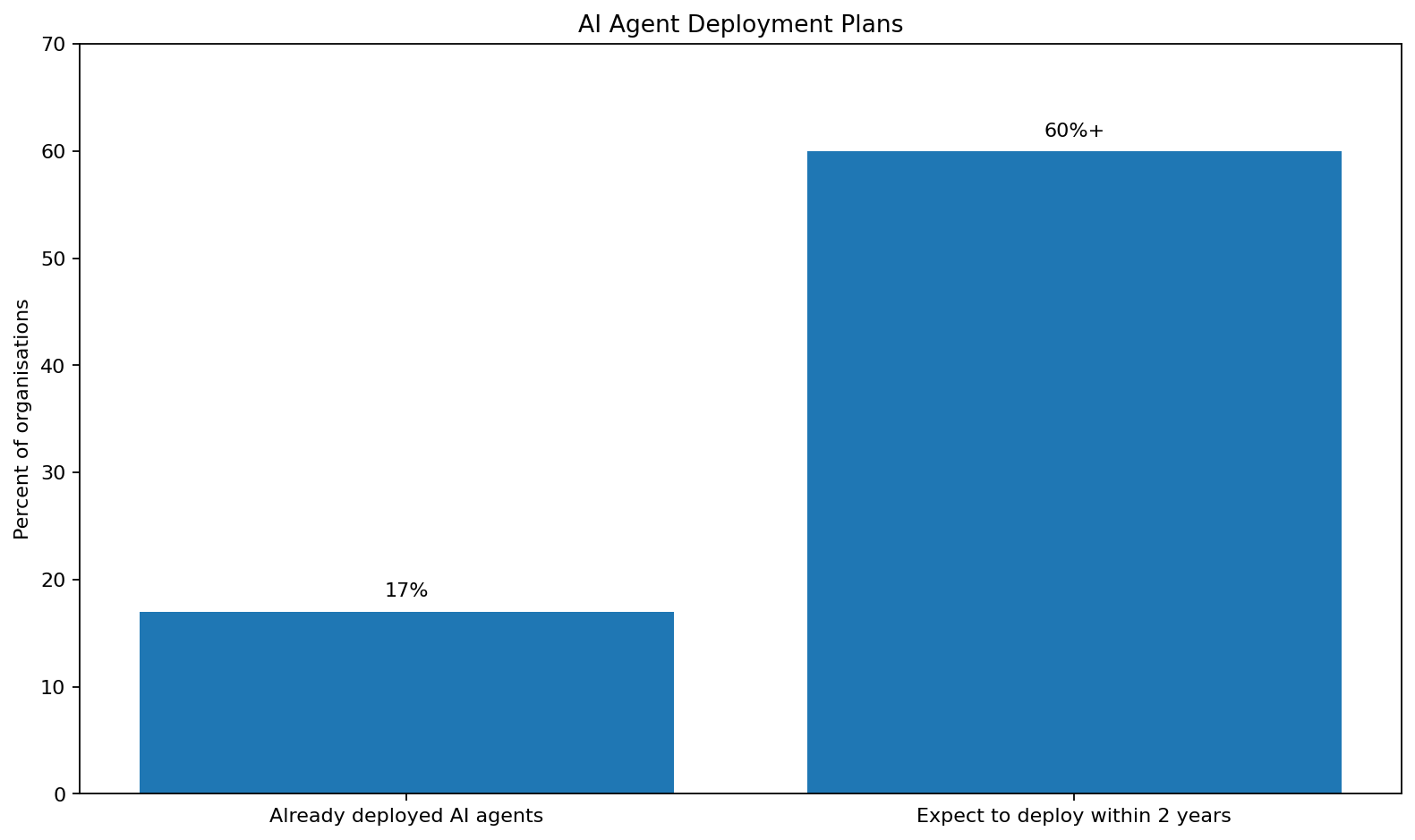
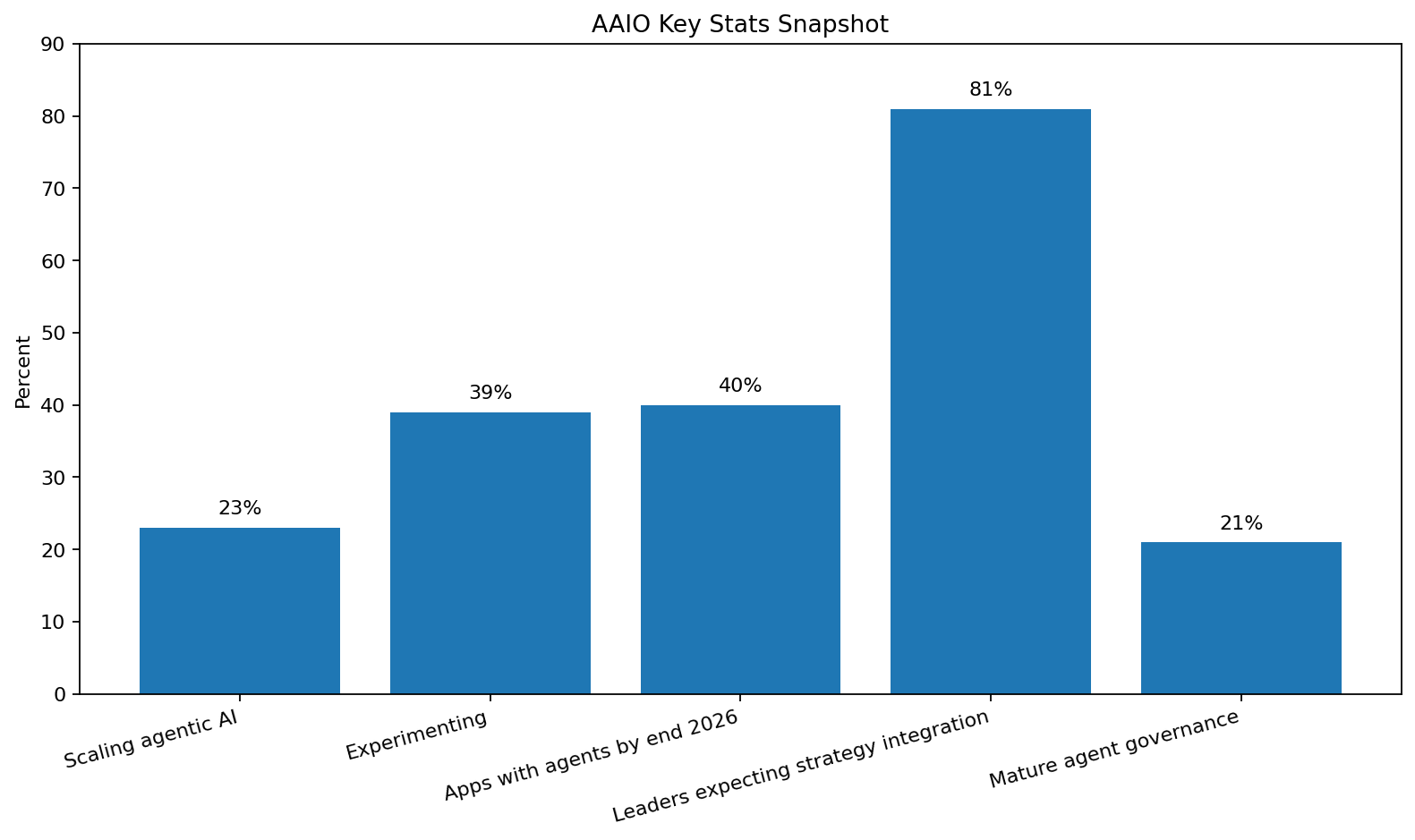
The clearest signal of all is enterprise adoption. McKinsey found that 23% of organisations are already scaling an agentic AI system somewhere in the business while another 39% are experimenting. 62% are already beyond pure theory! Deloitte’s 2026 research adds that 23% of companies are already using agentic AI at least moderately and within two years 74% expect to be doing so, including 23% planning extensive use and 5% expecting it to become a core part of operations. Gartner’s 2026 CIO and Technology Executive Survey says 17% of organisations have deployed AI agents already while more than 60% expect to do so within two years.
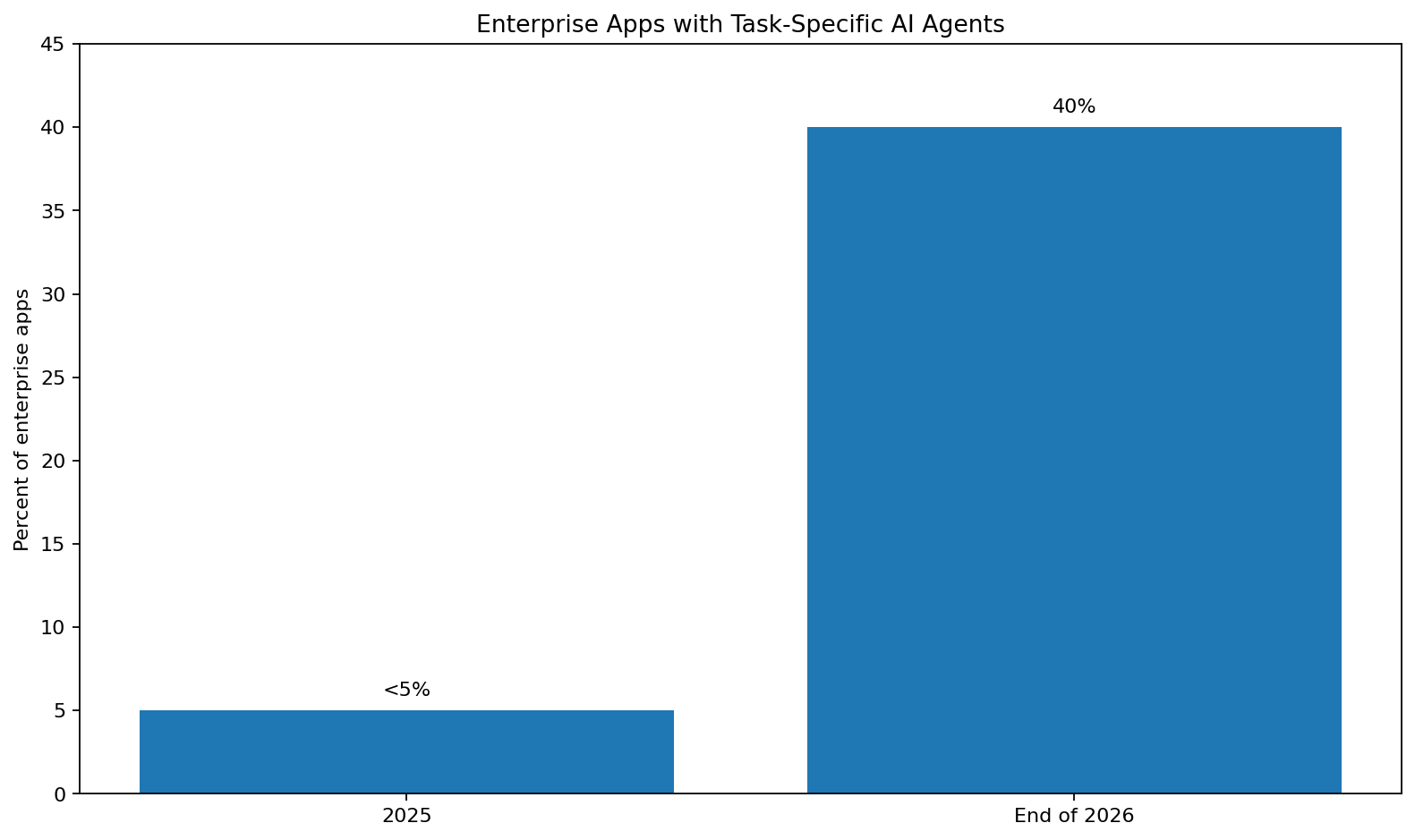
Software is also being rebuilt around agents. Gartner predicts that 40% of enterprise applications will include task specific AI agents by the end of 2026, up from less than 5% in 2025. This is one of the most important numbers in this whole post, because it means AI agents are not staying confined to chat windows. They are being embedded into the software people and businesses already use. When that happens, optimisation is no longer mainly about appearing in search results. It becomes about being readable and operable by the software layer itself.
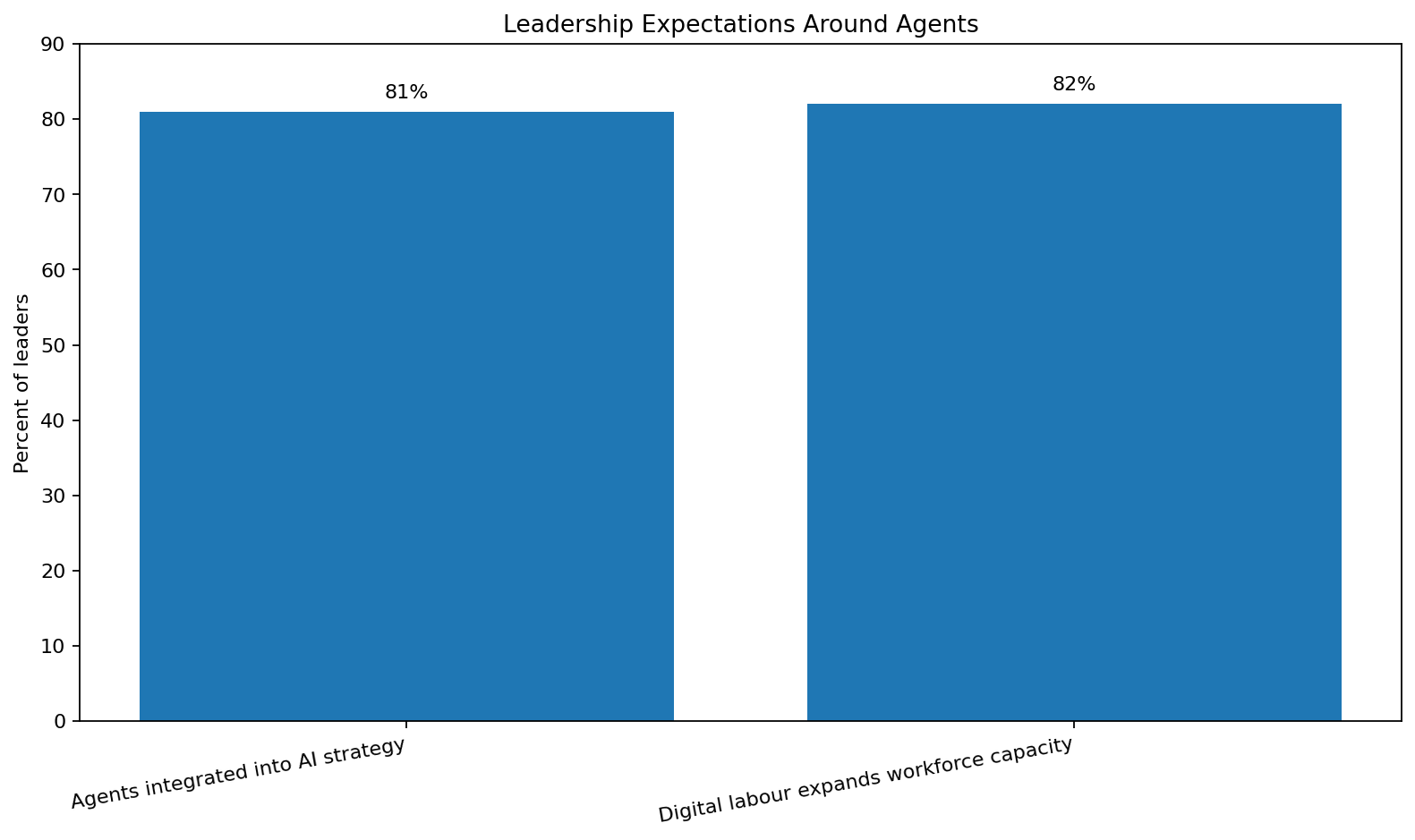
Microsoft’s Work Trend Index shows how seriously leadership is taking this. It found that 81% of leaders expect agents to be moderately or extensively integrated into their AI strategy within 12 to 18 months and 82% say they are confident they will use digital labour to expand workforce capacity in that same period. This means the people allocating budgets are already thinking beyond AI as content assistance. They are thinking in terms of systems that do work.
The second reason - AI is already changing discovery
This is where AAIO starts to feel very practical.
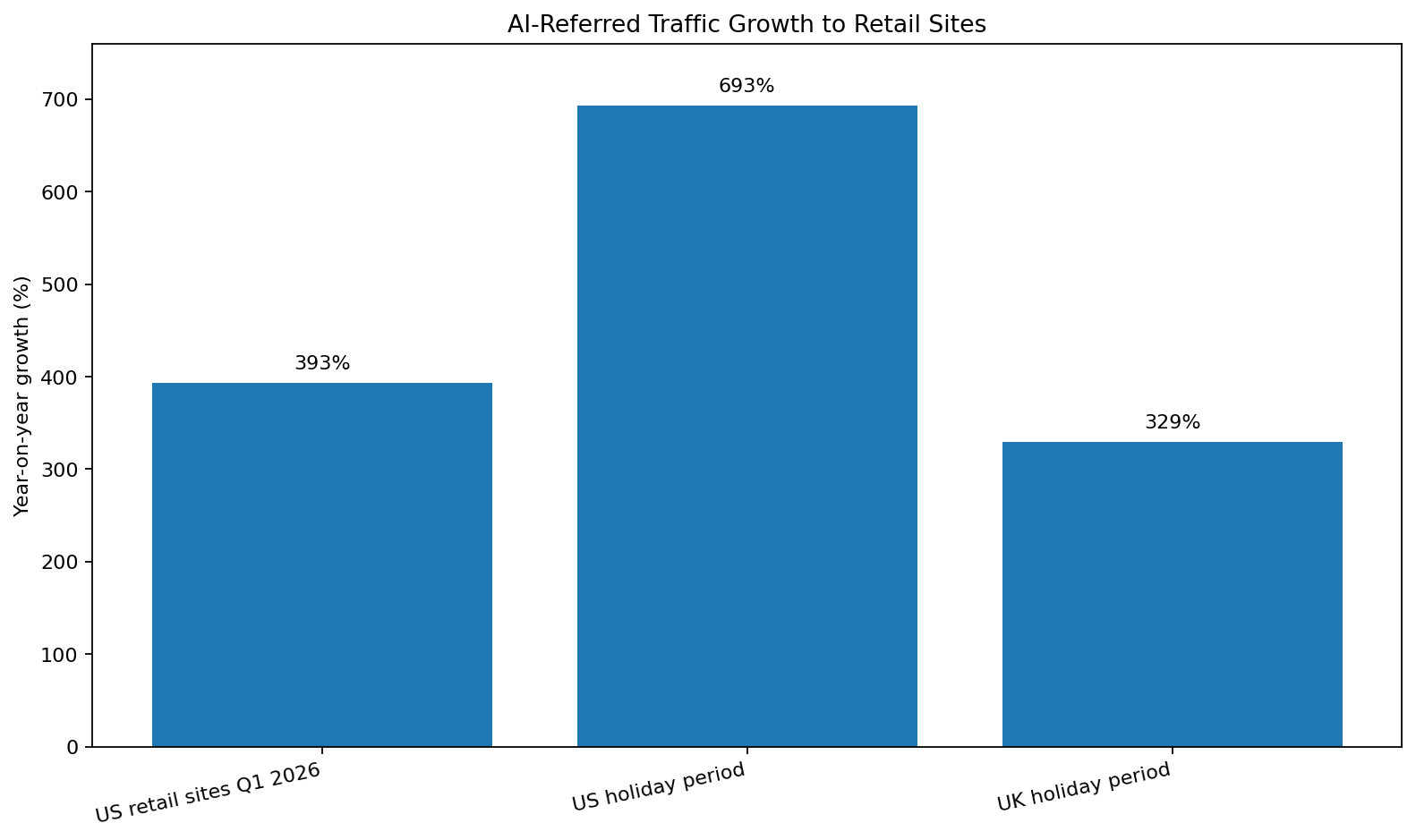
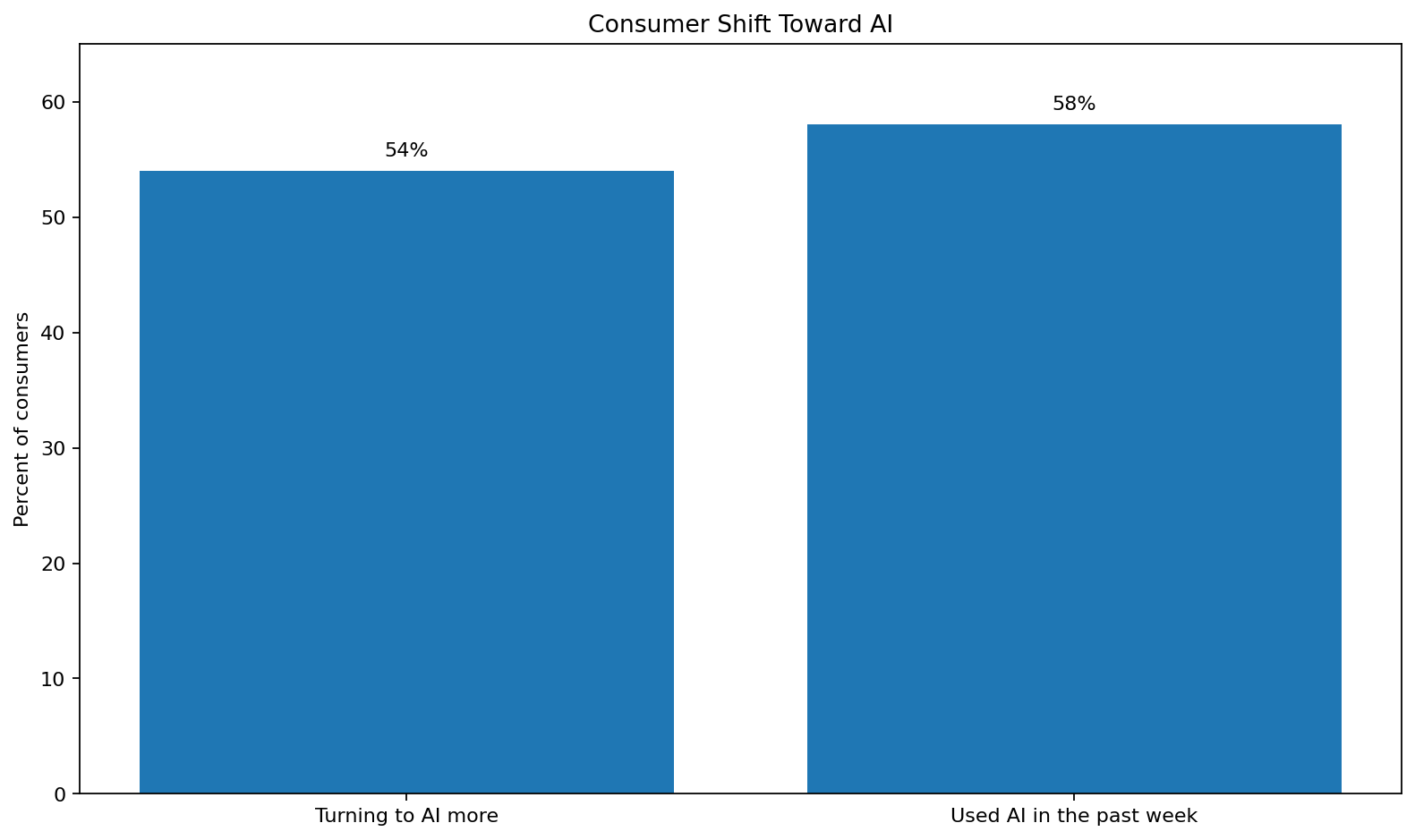
Adobe reported that traffic from AI sources to US retail sites grew 393% year over year in Q1 2026 and that AI referred visitors are outperforming traditional traffic on engagement, conversion and revenue per visit. Adobe’s March 2026 consumer survey also found that 54% of consumers say they are turning to AI more while 58% had used AI in the past week. Earlier, Adobe reported that AI driven traffic to retail sites during the 2025 holiday period surged 693% year over year in the US and 329% in the UK. This is not a side trend anymore. It is the start of a serious traffic channel.
Google’s own rollout trajectory shows why this matters. In May 2025, Google said AI Overviews had expanded to more than 200 countries and territories and more than 40 languages. In April 2026, Google confirmed that AI Overviews were beginning to roll out in the European Economic Area, starting with countries including Germany, Ireland, Italy and Spain. In other words, the infrastructure for AI mediated discovery is no longer local or experimental. It is international and expanding.
If discovery is increasingly happening through summaries, recommendations and AI assisted evaluation, then the optimisation target changes. You are not just trying to win a click. You are trying to win selection. An AI agent deciding what to cite, compare, retrieve or recommend needs much clearer signals than a human casually browsing ten links. This is AAIO territory.
The third reason - scale is rising faster than trust and governance
This is what makes AAIO more than just ‘content for bots’.
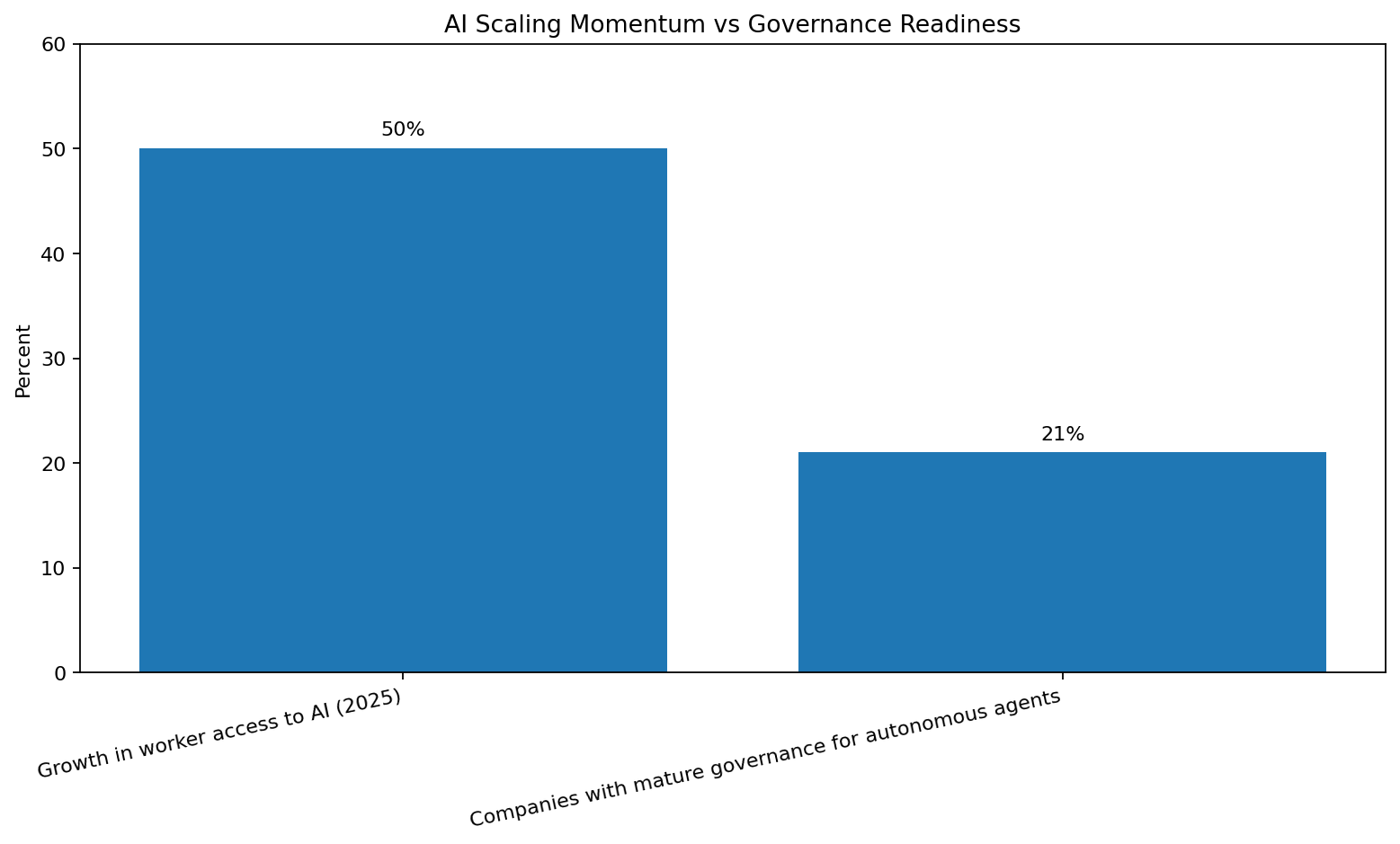
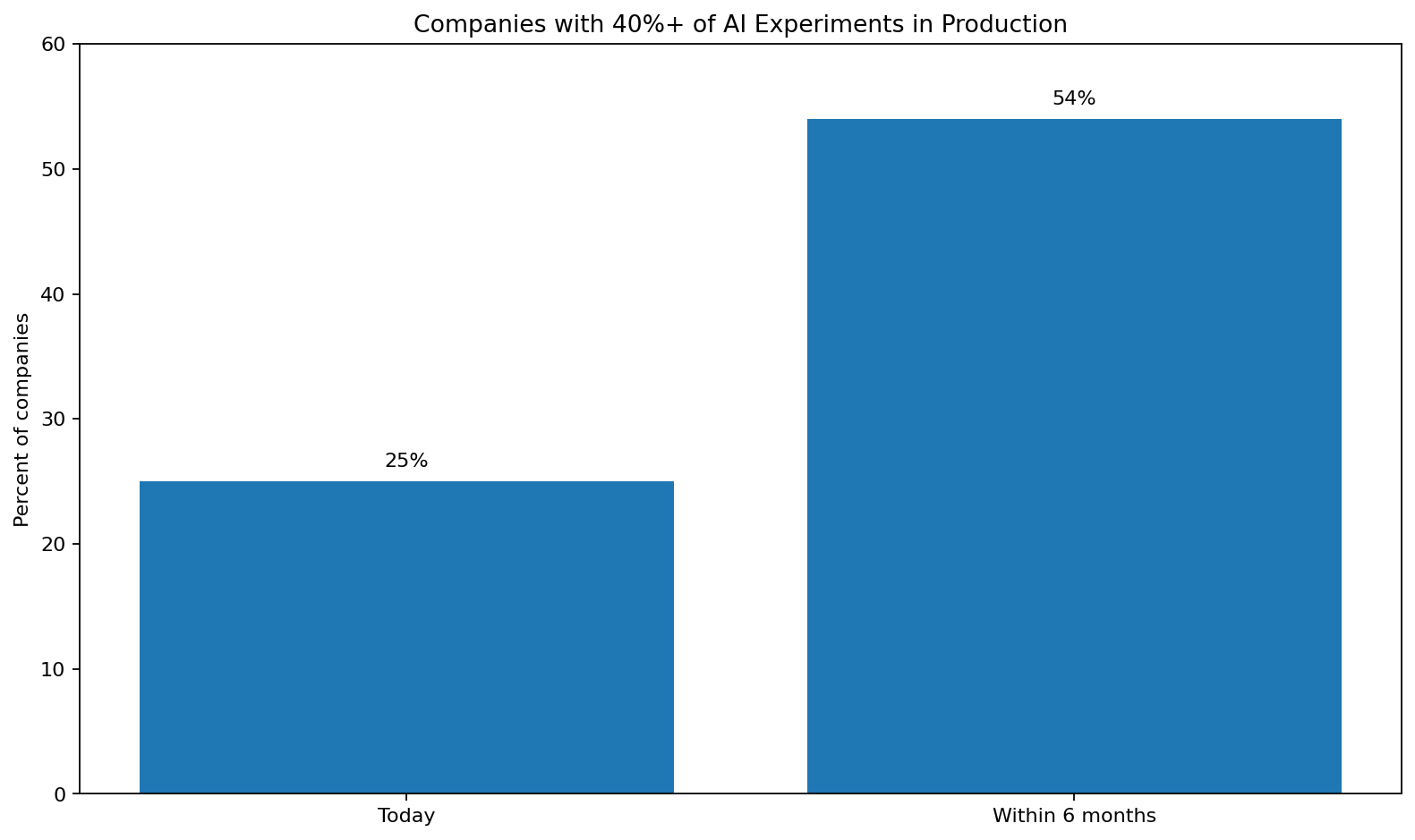
Deloitte says worker access to AI rose by 50% in 2025 and the share of companies expecting 40% or more of AI experiments to be in production rises from 25% today to 54% within six months. But Deloitte also says only 21% of companies have a mature governance model for autonomous agents. In another Deloitte write up based on the same 2026 research, it warns that agentic AI is scaling faster than guardrails. This mismatch matters because agents will naturally favour sources and systems that look safe, structured and dependable.
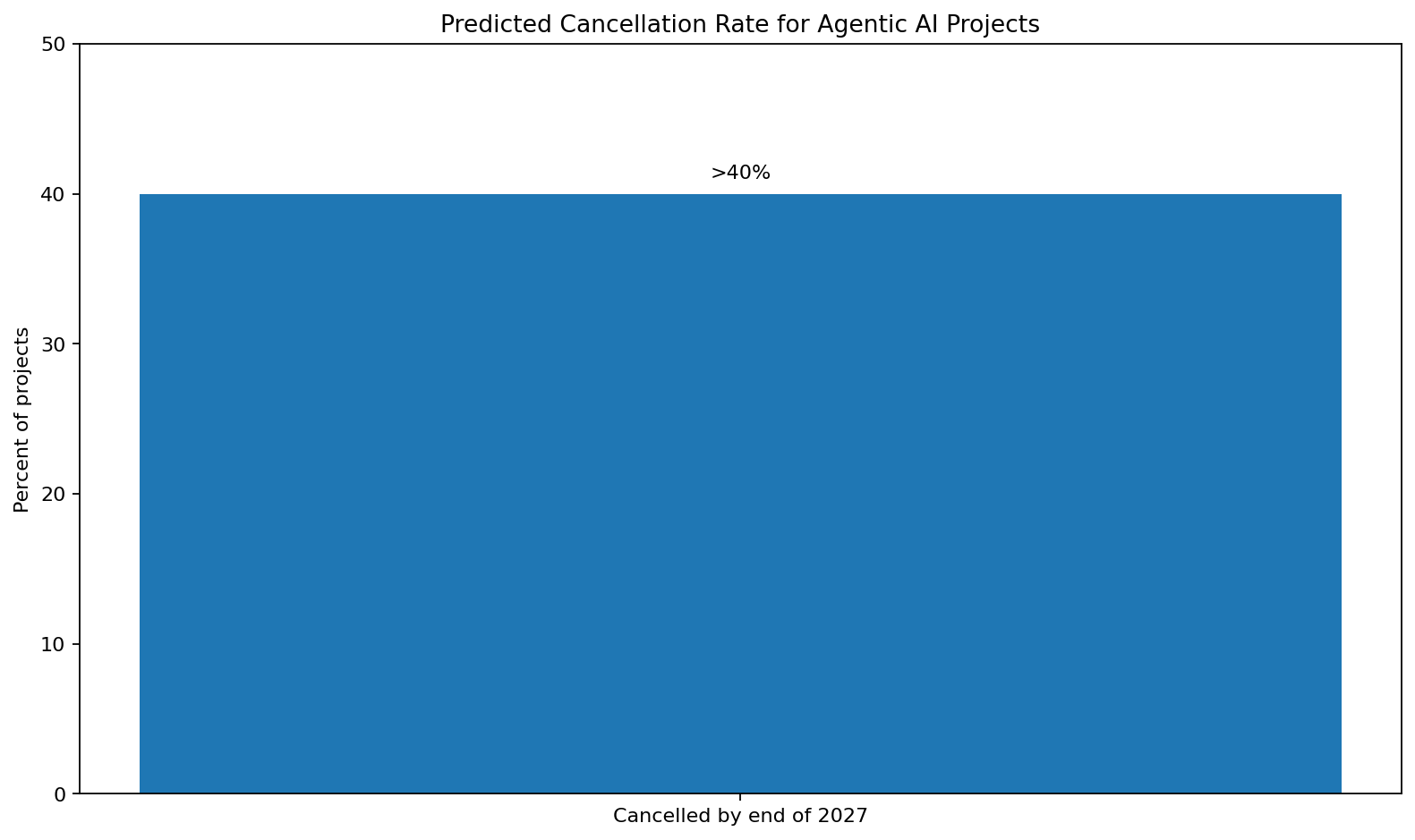
Gartner is effectively warning the same thing from the opposite angle. It predicts that over 40% of agentic AI projects will be cancelled by the end of 2027, largely because of escalating costs, unclear business value or inadequate risk controls. This means we are not heading into a simple future where every agent wins. We are heading into a future where trusted, well instrumented, well governed agent ecosystems win. AAIO is partly about visibility but it is also about reducing the reasons an AI system would avoid, downgrade or fail to use your information.
Why SEO and GEO are too small as frameworks:
SEO was designed for link retrieval.
GEO was designed for generative citation.
AAIO is about agentic execution.
An optimisation strategy built only for ranking or summary inclusion will never ever be complete when the system is expected to actually do things. If you ask an agent to compare products, shortlist suppliers, recommend software, verify a refund policy, choose a delivery option, place an order, book a demo or trigger an action inside an app then the critical signals around topical authority are thrown out the window. The new signals become things like structured inputs, consistency, API accessibility, policy clarity, pricing clarity, fulfilment reliability, authentication simplicity and confidence that the system can proceed without hesitating even for a split second. Those demands line up with the rise of task specific agents inside apps and workflows.
This is exactly why context is becoming more valuable. Gartner’s 2026 strategic technology trend commentary says context is emerging as one of the most critical differentiators for successful agent deployments and predicts that by 2028 more than half of the GenAI models used by enterprises will be domain specific. This means generic optimisation will become weaker over time. The better strategy will be to supply the right context in the right structure for the right domain.
What AAIO actually means
Design your digital presence so an agent can do five things well:
Understand who you are Clear entity signals. Consistent brand, product and company data. Stable naming and a strong source of truth pages.
Extract what matters Machine readable specs. Structured content. Direct answers with clear definitions. Accessible schema where appropriate. Clean tables. Unambiguous policies.
Trust the answer Authoritative sourcing. Freshness. Evidence. Consistency across pages. Transparent ownership. Clear revision dates. Publicly stated limitations.
Take action Usable APIs. Predictable forms. Clear pricing. Real availability. Delivery windows and return policies. Identity and authentication that do not break flows.
Monitor outcomes Logs, attribution, traffic source analysis, AI referral tracking, citation tracking and conversion paths for agent sourced visits.
The numbers above support this shift because they show both the demand side and the infrastructure side moving in the same direction. Consumers are using AI more. AI referrals are growing rapidly. Enterprises are embedding agents in software. Leaders expect digital labour to expand. But governance is lagging and many projects will fail. In that environment, agents will favour clarity and trust over fluff.
The commercial case for AAIO is getting stronger
If you want the simple business case, it's here - agents will become a meaningful layer between demand and supply.
This means they will influence what gets recommended, what gets cited, what gets shortlisted and eventually what gets purchased or ignored. Adobe’s data already suggests AI referred traffic can outperform traditional traffic on engagement and conversion. Microsoft’s data suggests leaders are preparing for agents to become a real part of operating strategy. Gartner’s app forecast suggests agent behaviour will become a normal product feature, not a novelty. McKinsey and Deloitte show agentic adoption is already happening inside enterprises. Put all of that together and the conclusion is hard to avoid - businesses will increasingly need to optimise not only for people and search engines but for the software agents acting on behalf of both.
And there is another reason this matters - not all traffic will arrive as traffic. In an agentic environment, value may be created before the click. Your pricing may be compared in an AI interface. Your policy may be used to exclude you from consideration. Your product specs may be cited in a buying summary. Your checkout may be abandoned by an agent that cannot interpret a shipping rule. Your business can lose the decision before a human ever reaches your site. AAIO is really about optimising for that invisible decision layer. This is what makes it broader than both SEO and GEO.
The most useful stats to remember
A few numbers say almost everything:
23% of organisations are already scaling an agentic AI system somewhere in the enterprise. 39% are experimenting with AI agents. 23% of companies are already using agentic AI at least moderately. 74% expect at least moderate agentic AI use within two years. 17% of organisations have deployed AI agents already while 60%+ expect to within two years. 40% of enterprise applications are expected to include task specific AI agents by the end of 2026, up from less than 5% in 2025. 81% of leaders expect agents to be integrated into AI strategy within 12 to 18 months. 82% expect digital labour to expand workforce capacity. 50% growth in worker access to AI happened in 2025. 25% of companies say at least 40% of AI experiments are in production today, rising to 54% within six months. Only 21% have mature governance for autonomous agents. 40%+ of agentic AI projects are predicted to be cancelled by the end of 2027. AI traffic to US retail sites grew 393% YoY in Q1 2026. AI driven traffic to retail sites surged 693% YoY in the US holiday period and 329% YoY in the UK. 54% of consumers say they are turning to AI more and 58% used AI in the past week. Google AI Overviews are available in 200+ countries and territories and 40+ languages.
These are not niche signals. A structural change in how visibility and action happen online is coming.
Conclusion
'Forget SEO and GEO’ as a title for this post was deliberately provocative. SEO is of course not dead. GEO is of course not useless. But both are too narrow if we are moving toward AI systems that do much more than retrieve or summarise. The bigger game is AAIO / agentic AI optimisation.
This means building digital assets that agents can parse, trust, cite and use. You need to stop with the old mentality of ‘How do I rank’ to ‘How do I become the most usable answer and the easiest action path for an AI system’.
Stop thinking less like a publisher chasing clicks and more like a trusted node in a machine driven decision network. This is where we are going. And the 2026 data increasingly says we are going there fast.
Sources
https://www.deloitte.com/ce/en/issues/generative-ai/state-of-ai-in-enterprise.html
https://www.deloitte.com/us/en/insights/topics/emerging-technologies/ai-agents-scaling-faster.html
https://www.gartner.com/en/articles/hype-cycle-for-agentic-ai
https://www.microsoft.com/en-us/worklab/work-trend-index/2025-the-year-the-frontier-firm-is-born
https://business.adobe.com/uk/blog/ai-driven-traffic-surges-across-industries
https://business.adobe.com/blog/ai-traffic-surge-retail-sites-not-machine-readable
https://blog.google/products-and-platforms/products/search/ai-overview-expansion-may-2025-update/
https://support.google.com/websearch/thread/425433174?hl=en&msgid=425772043